

Retaining Walls in Northern Virginia: Design Options, Costs, and How to Hire the Right Contractor
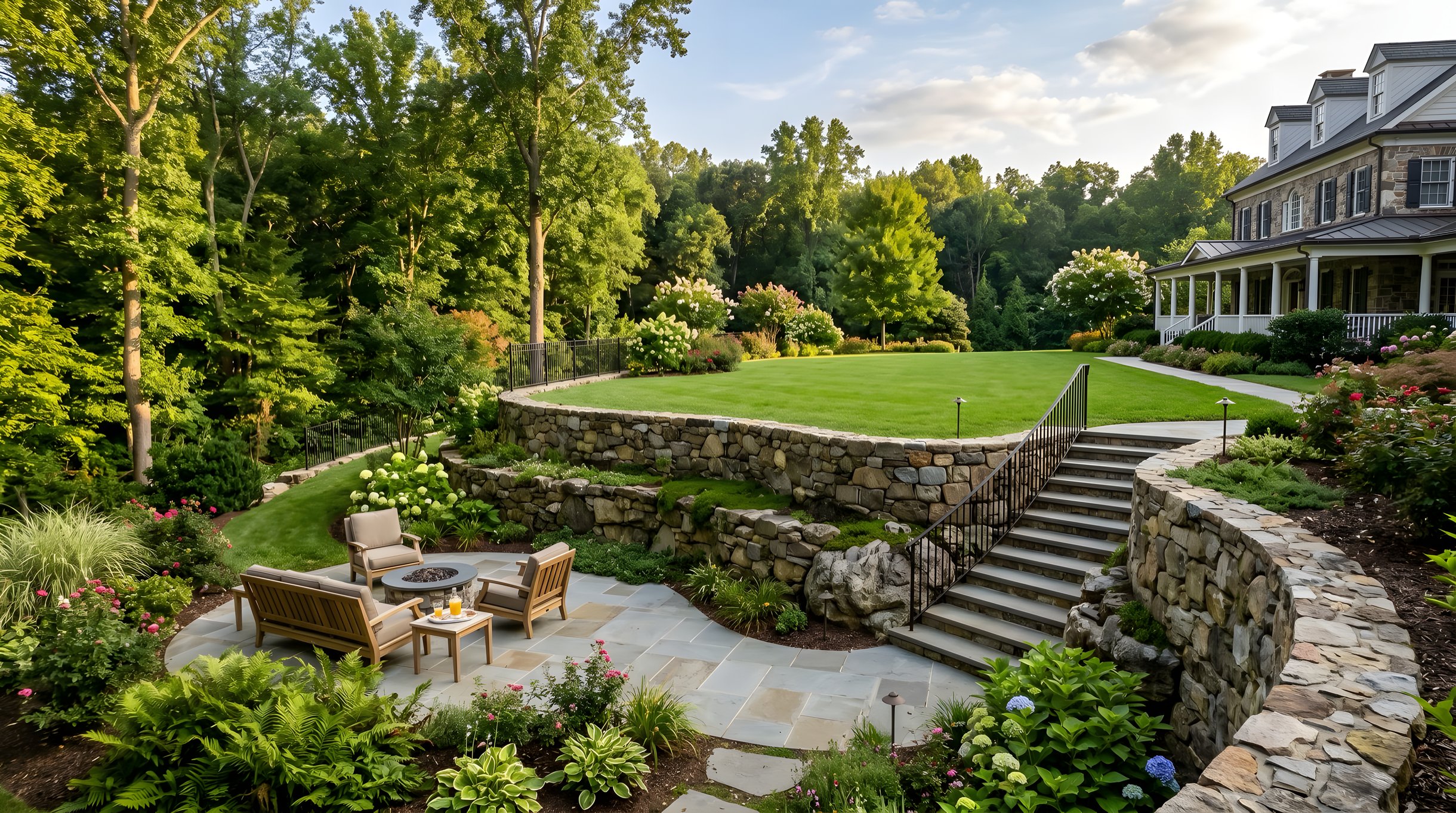
Retaining walls are one of the most functional and most misunderstood elements in residential landscape design. Done correctly, they solve grade problems that affect drainage, usability, and structural integrity of your outdoor space. Done incorrectly, they fail. And a failed retaining wall in Northern Virginia's clay soils and variable weather doesn't just look bad. It erodes, it shifts, and it can affect foundations, drainage systems, and neighboring properties.
Homeowners in Great Falls, McLean, and Leesburg with sloped properties often don't know they have a retaining wall opportunity until a designer walks their site and shows them what's possible. A property with a 3-foot grade change across the backyard might have enough usable flat space for a full outdoor living area once that grade is properly managed with a thoughtfully designed wall system.
This guide covers the design options, cost ranges, permit requirements, and contractor selection criteria that matter for retaining wall projects in Northern Virginia.
- Retaining walls in Northern Virginia must account for clay soil drainage to avoid hydrostatic pressure buildup that causes wall failure.
- Material selection affects cost, longevity, and aesthetic. Natural stone, concrete block, and timber each have different performance profiles in this climate.
- Walls above a certain height require permits in Fairfax and Loudoun Counties. Work with a contractor who handles this without putting it back on you.
- A properly designed retaining wall transforms an unusable sloped yard into a functional outdoor living space. The design opportunity is as important as the structural function.
- Retaining wall failure is almost always a drainage problem, not a material problem. Drainage design behind and beneath the wall is as important as the wall itself.
Why Do Northern Virginia Properties Need Retaining Walls?
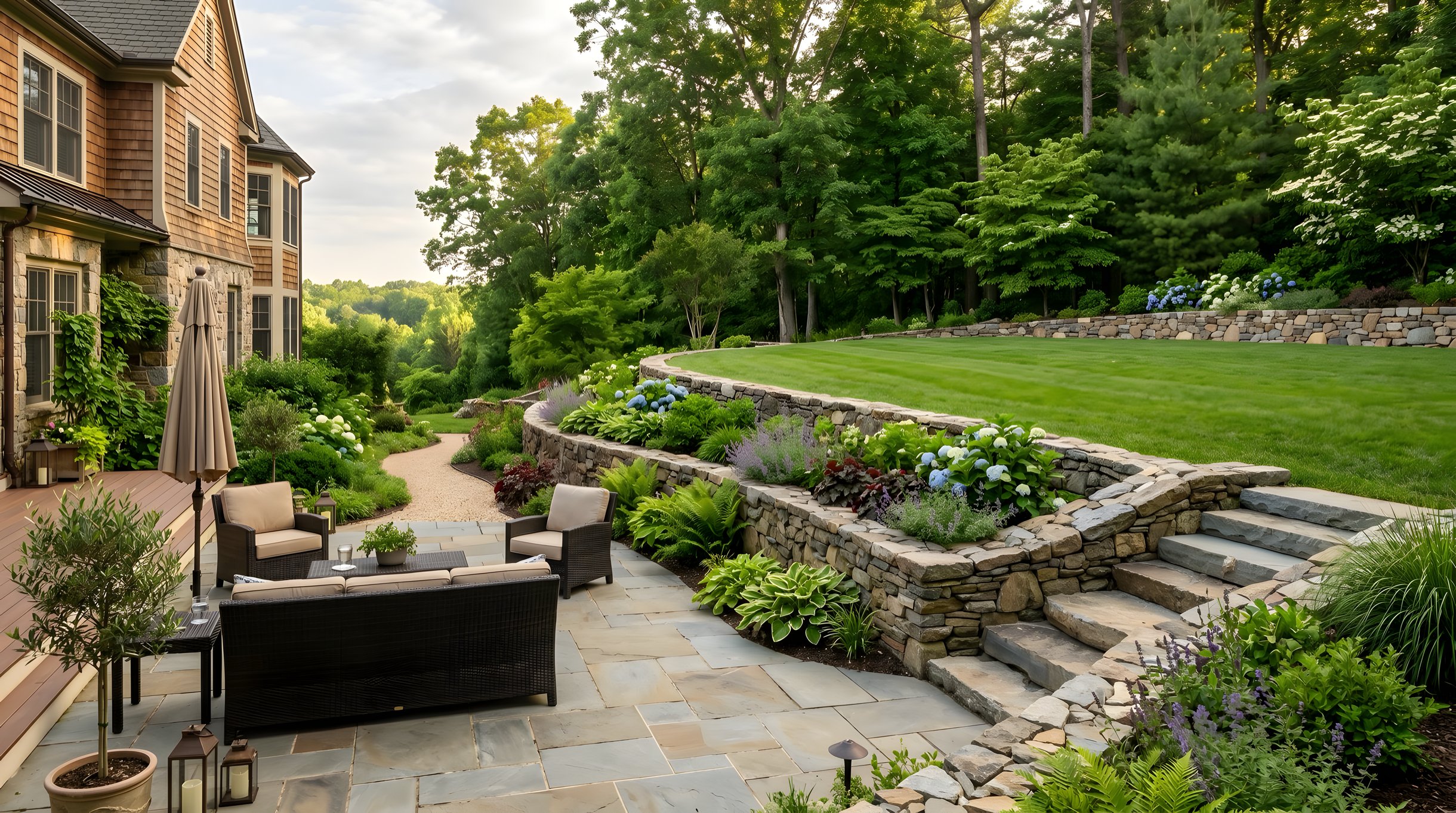
Northern Virginia's topography ranges from the relatively flat communities along the Dulles corridor to the significantly graded lots of Great Falls, McLean, and parts of Leesburg near the Potomac. Many properties across Fairfax and Loudoun Counties have grade changes of two to six feet across the backyard that limit usable outdoor space and create drainage issues when unmanaged.
Water follows grade. On an unmanaged slope, rainwater runs downhill, taking topsoil with it, concentrating at low points, and creating erosion channels that worsen over time. Northern Virginia's clay soils, which shed water rather than absorb it, accelerate this process. A properly designed retaining wall system with drainage infrastructure behind it intercepts this water, redirects it safely, and stabilizes the grade in a way that protects both the yard and any structures nearby.
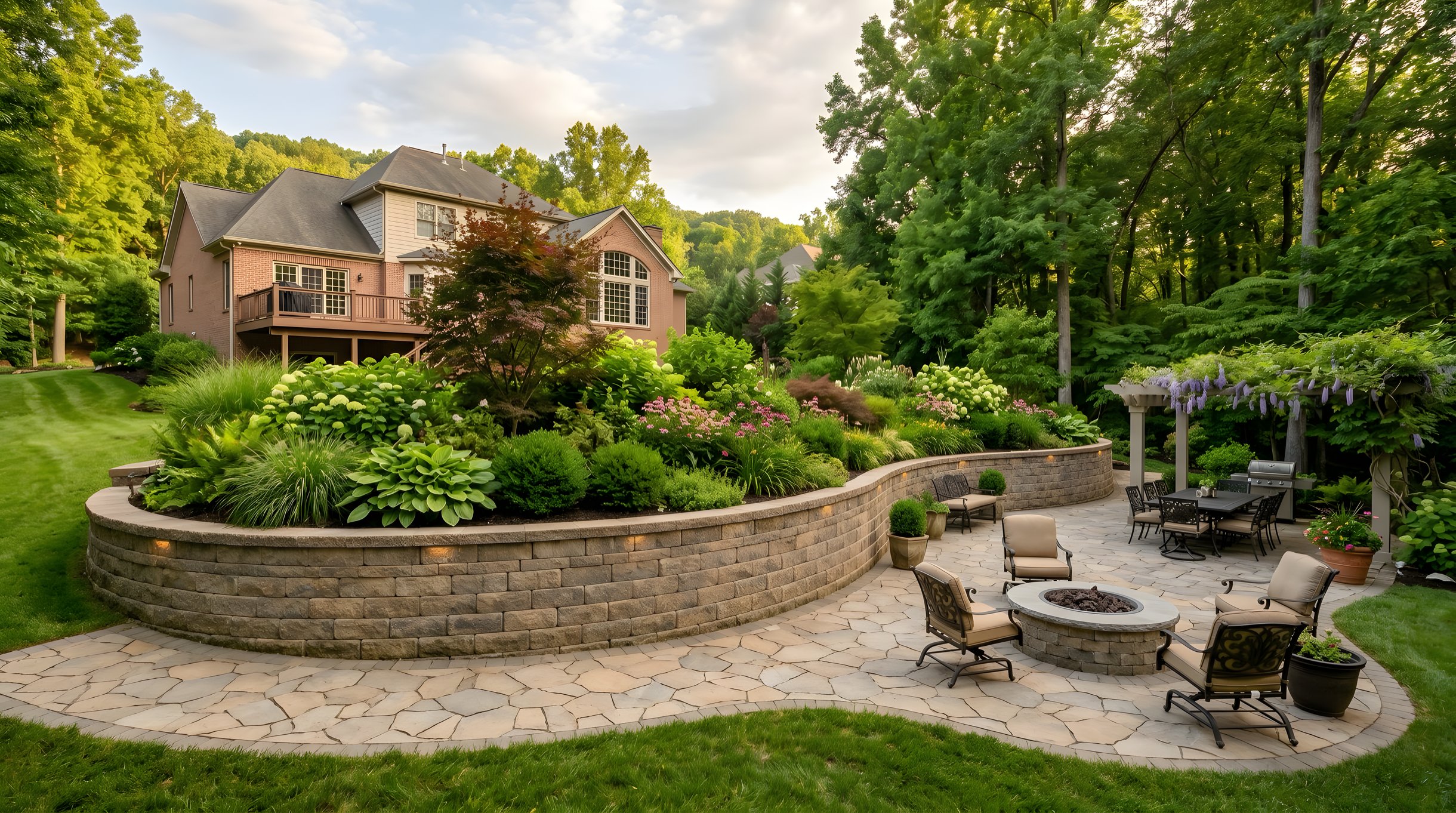
Beyond drainage, retaining walls create something homeowners on sloped properties often don't know they're missing until they see it: flat, usable space. A property with a steep backyard slope has no place to put a patio, a fire pit, or a play area for children. A properly designed wall system can create one or two usable terrace levels that function as genuine outdoor living space.
What Are the Main Retaining Wall Materials for Northern Virginia Projects?
Material selection affects aesthetics, structural performance, longevity, and cost. Here is a realistic breakdown of the options most commonly specified for residential retaining wall projects in Northern Virginia.
Natural Stone
Natural stone walls, built with fieldstone, bluestone, or other locally appropriate stone, are the most aesthetically integrated choice for wooded properties in Great Falls and McLean. They look like they belong in the landscape because they're made from materials that occur naturally in this region. Dry-stacked natural stone walls have significant visual appeal and, when built correctly, perform well over decades.
The limitation of natural stone is that dry-stacked walls have structural limits. For walls above three to four feet, engineered solutions with better defined structural parameters are typically the appropriate choice. Natural stone is also more labor-intensive to install, which is reflected in the cost.
Segmental Concrete Block
Engineered retaining wall systems using segmental concrete block, such as Allan Block, Versa-Lok, or similar products, are the most commonly specified material for residential retaining walls in Northern Virginia. They provide defined structural performance characteristics, come in a range of textures and colors, and can be engineered and permitted for walls of significant height.
The best concrete block systems mimic the texture of natural stone well enough that from a distance they're difficult to distinguish. They're also geogrid-reinforceable, meaning larger walls can incorporate layers of geosynthetic reinforcement that dramatically extend the wall's structural capacity.
Poured Concrete and Concrete Block
For structural retaining walls on challenging sites with significant loads, steep grades, or proximity to structures, poured concrete or reinforced concrete block walls may be the appropriate choice. These are engineered solutions that require professional design and permitting but provide the highest structural performance in difficult site conditions.
Timber
Pressure-treated timber retaining walls are lower cost but have meaningful limitations in Northern Virginia's climate. Timber walls in contact with soil in a wet environment have a lifespan measured in years rather than decades. They're appropriate for low walls with limited structural requirements and in situations where cost is the primary driver. For anything above two to three feet or with drainage challenges, more durable materials are a better long-term investment.
What Does Drainage Behind a Retaining Wall Involve?
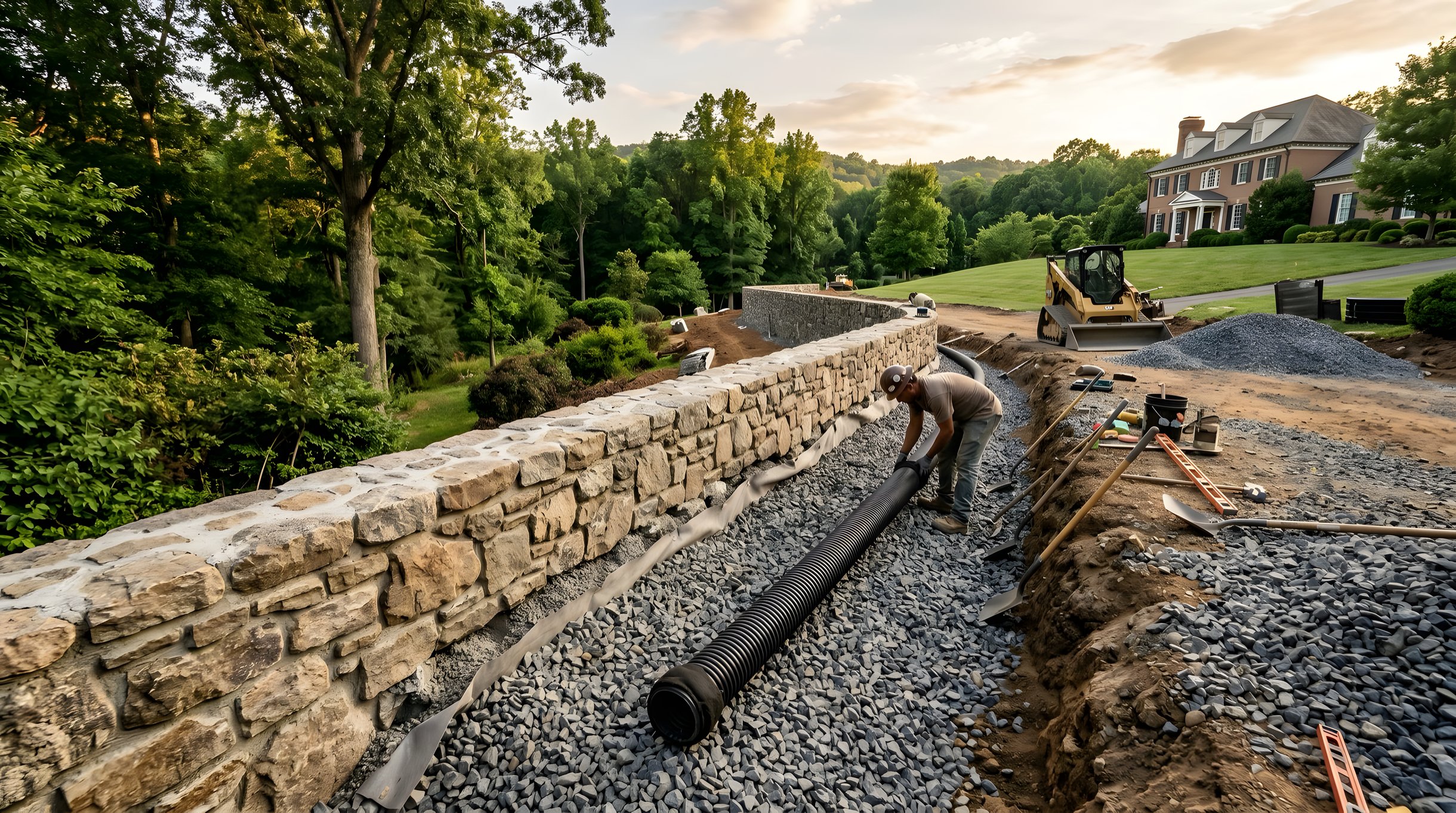
This is the element most often underspecified by inexperienced contractors, and the one most responsible for retaining wall failure in Northern Virginia. Clay soils hold water. Water trapped behind a retaining wall generates hydrostatic pressure. Hydrostatic pressure, if not relieved, will push a wall over or apart regardless of how well the facing materials were installed.
Professional retaining wall construction in Northern Virginia includes drainage aggregate backfill directly behind the wall, drainage fabric to separate the aggregate from the native clay soil, perforated drain pipe at the base of the wall to collect and redirect water, and in some cases weep holes or outlet structures that allow water to exit the wall system safely.
Asking a prospective contractor how they handle drainage behind the wall is one of the most revealing questions you can ask during the contractor evaluation process. A company that describes the drainage system in specific terms knows what they're doing. A company that glosses over it or treats it as obvious is telling you they may not prioritize this critical step.
Do Retaining Walls in Northern Virginia Require Permits?
In Fairfax County, retaining walls over four feet in height measured from the bottom of the footing to the top of the wall require a building permit and engineered plans. Loudoun County has similar requirements. Some HOA communities have additional requirements independent of county permits.
Working with a contractor who handles permit applications as part of the project scope saves you significant administrative effort and ensures the wall is designed and built to meet the structural standards required for approval. Unpermitted walls above the threshold height create disclosure obligations at the time of property sale and may be required to be removed or permitted retroactively.
Sunrise Landscape and Design manages permit applications for retaining wall projects requiring engineering and county approval. We have 38 years of experience navigating Fairfax and Loudoun County building departments, and we don't leave this step to our clients to manage themselves.
What Does a Retaining Wall Cost in Northern Virginia?
Retaining wall costs in Northern Virginia depend on height, material, length, site conditions, and whether the project requires engineering and permitting. Realistic ranges for residential projects in the current market:
- Low natural stone or timber wall (under 2 feet): $40 to $80 per linear foot installed
- Mid-height segmental block wall (2 to 4 feet): $65 to $130 per linear foot installed
- Engineered wall with geogrid reinforcement (4 to 6 feet): $100 to $200 per linear foot installed
- Natural stone wall (any height): $90 to $250 per linear foot installed depending on stone type and complexity
These ranges reflect Northern Virginia labor and material costs. Projects with complex site access, significant drainage work, or proximity to structures will trend toward the higher end. Projects where the wall creates significant new usable outdoor space often return meaningful value at resale, particularly in premium communities like Great Falls, McLean, and Vienna where outdoor living improvements command strong market premiums.
Frequently Asked Questions
How long do retaining walls last in Northern Virginia?
Properly designed and installed natural stone and engineered concrete block retaining walls in Northern Virginia should last 25 to 50 years or more with appropriate drainage and minimal maintenance. Timber walls typically last 10 to 20 years depending on installation quality and moisture exposure. The single greatest determinant of wall longevity is drainage design, not material selection.
Can a retaining wall solve my drainage problem in Northern Virginia?
A retaining wall can be part of a drainage solution, but it's not a drainage solution by itself. Retaining walls manage grade and redirect water when combined with proper drainage infrastructure. Properties with persistent drainage problems typically need a comprehensive approach that may include grading corrections, French drains, dry creek beds, and downspout management in addition to structural walls. A site assessment by a qualified professional will identify the right combination for your specific conditions.
What is the difference between a retaining wall and a garden wall?
A retaining wall holds back soil and manages grade. It is structural. A garden wall or seat wall defines space, provides seating, or creates visual interest without resisting significant soil pressure. The distinction matters for permitting, engineering requirements, and material specifications. Both can be beautiful design elements, but they serve different functions and require different design approaches.
How do I know if my existing retaining wall needs to be replaced?
Signs that a retaining wall needs attention include visible leaning or tilting away from the retained soil, cracking or separating in the wall face, soil coming through joints or gaps, standing water at the base of the wall that doesn't drain after rain, and bulging in the center of the wall face. Any of these symptoms warrants a professional assessment before the wall fails and causes more significant damage or erosion.
Build a Retaining Wall That Lasts in Northern Virginia's Demanding Conditions
Sunrise Landscape and Design designs and builds retaining walls throughout Northern Virginia with the drainage engineering, material specifications, and structural detail that this region's conditions demand. We've been solving grade and drainage challenges on properties in Great Falls, McLean, Vienna, Oakton, Ashburn, and Leesburg for over 38 years.
If your property has a slope you haven't figured out how to use, or a drainage problem that's been getting worse each season, the answer often starts with a properly designed wall system. Let's walk the property together and show you what's possible.
Schedule a consultation with Sunrise Landscape and Design. Learn more about our hardscape services, drainage solutions, and design process.