

Outdoor Living Spaces in Northern Virginia: Design Ideas for Every Backyard
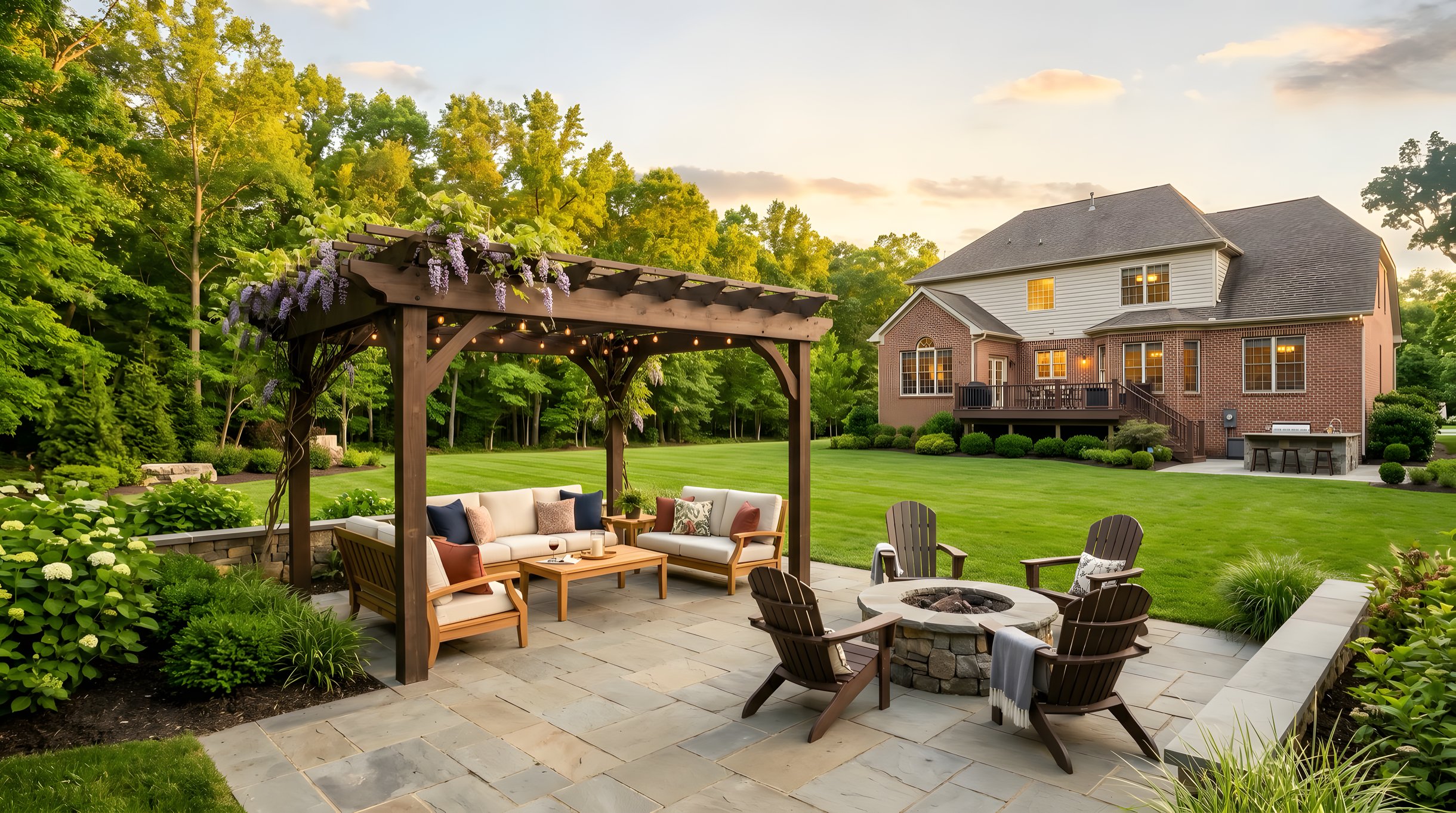
Most backyards in Northern Virginia are being wasted. Not because the homeowners don't care about them, but because nobody has ever helped them see what's actually possible.
That changes the first time you sit on a finished patio on a cool October evening with a fire going, your family around you, and the realization that this has been here the whole time, waiting to be built.
If your backyard gets used for about two weeks of the year, this guide is for you. We'll walk through the outdoor living design options that work specifically for Northern Virginia properties, what they cost, what HOA and site conditions affect, and how to start planning a space you'll actually live in.
- Northern Virginia's climate supports year-round outdoor living with the right design choices, including fire features and covered structures.
- The most-used outdoor spaces are the ones designed around how a family actually lives, not just how they look in photos.
- HOA requirements in communities across Fairfax and Loudoun Counties affect materials, setbacks, and structural approvals. Work with a contractor who knows this landscape.
- Phased outdoor living projects let you build your ideal space over time without doing everything at once.
- A well-designed outdoor living space consistently returns strong value at resale in Northern Virginia's premium markets.
Why Are So Many Northern Virginia Backyards Underused?
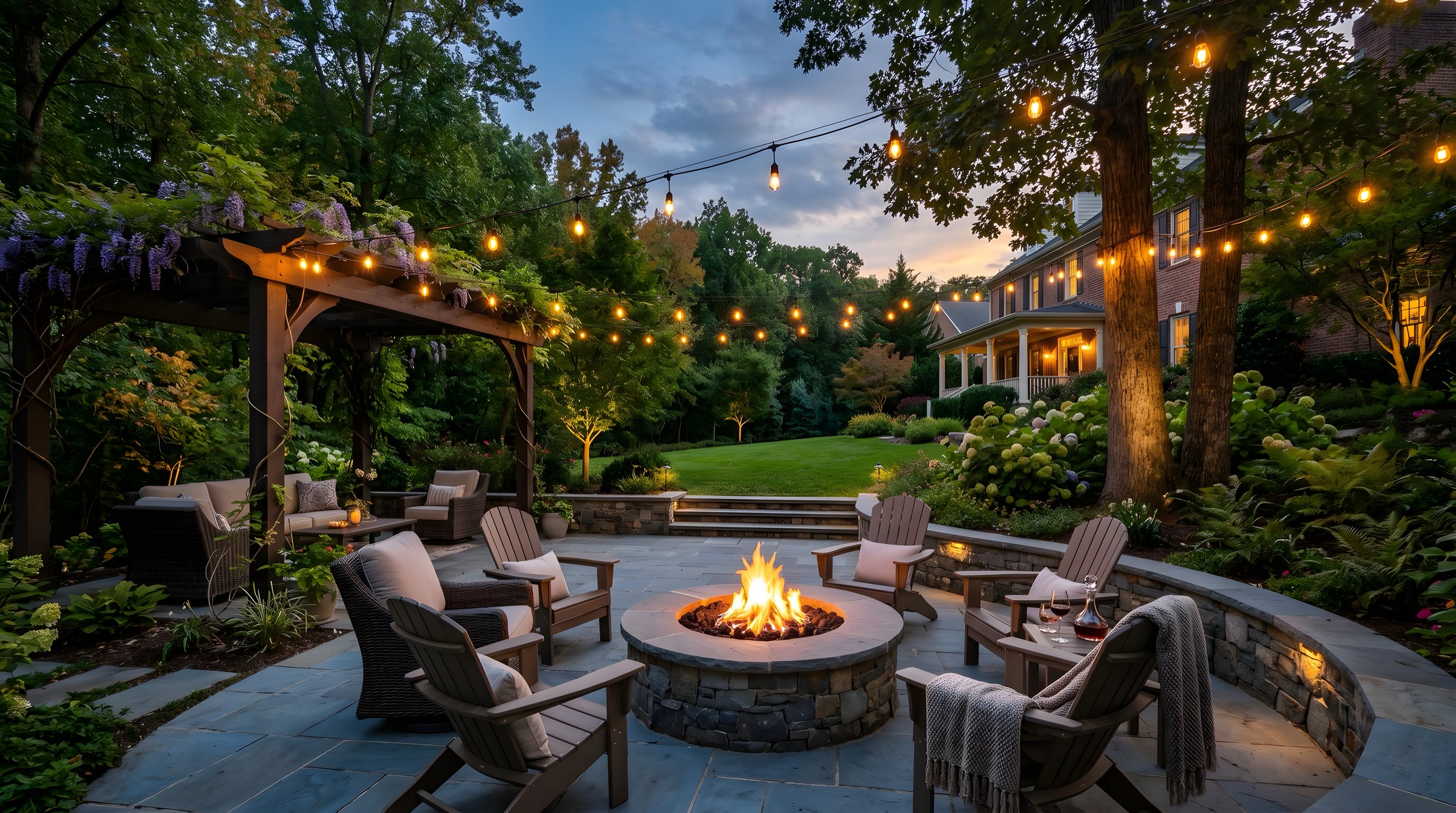
It's not a lack of money or a lack of interest. It's a gap between a vague idea and a concrete plan. Homeowners in Great Falls or McLean with $1.2 million homes look out at a flat expanse of grass and a builder-grade deck that's soft underfoot and wonder where to start. The answer is always the same: with a professional who can translate what you want to feel in your backyard into an actual design.
The other barrier is fear. Fear of spending a significant amount of money on something that turns out wrong, or that a contractor delivers something that looks nothing like what was discussed. That fear is grounded in real experience for a lot of homeowners. It's why the design process matters as much as the build itself.
At Sunrise Landscape and Design, we've been helping Northern Virginia homeowners make this leap for over 38 years. The transformation in how people use their properties after a well-designed outdoor living space is completed is one of the most consistent results we see. Yards that sat unused for years become the center of family life.
What Outdoor Living Design Options Work Best in Northern Virginia?
The right design for your property depends on lot size, grade, existing landscaping, HOA restrictions, and most importantly, how you want to use the space. Here's a breakdown of the most popular and functional options for Northern Virginia properties.
Patio Installation
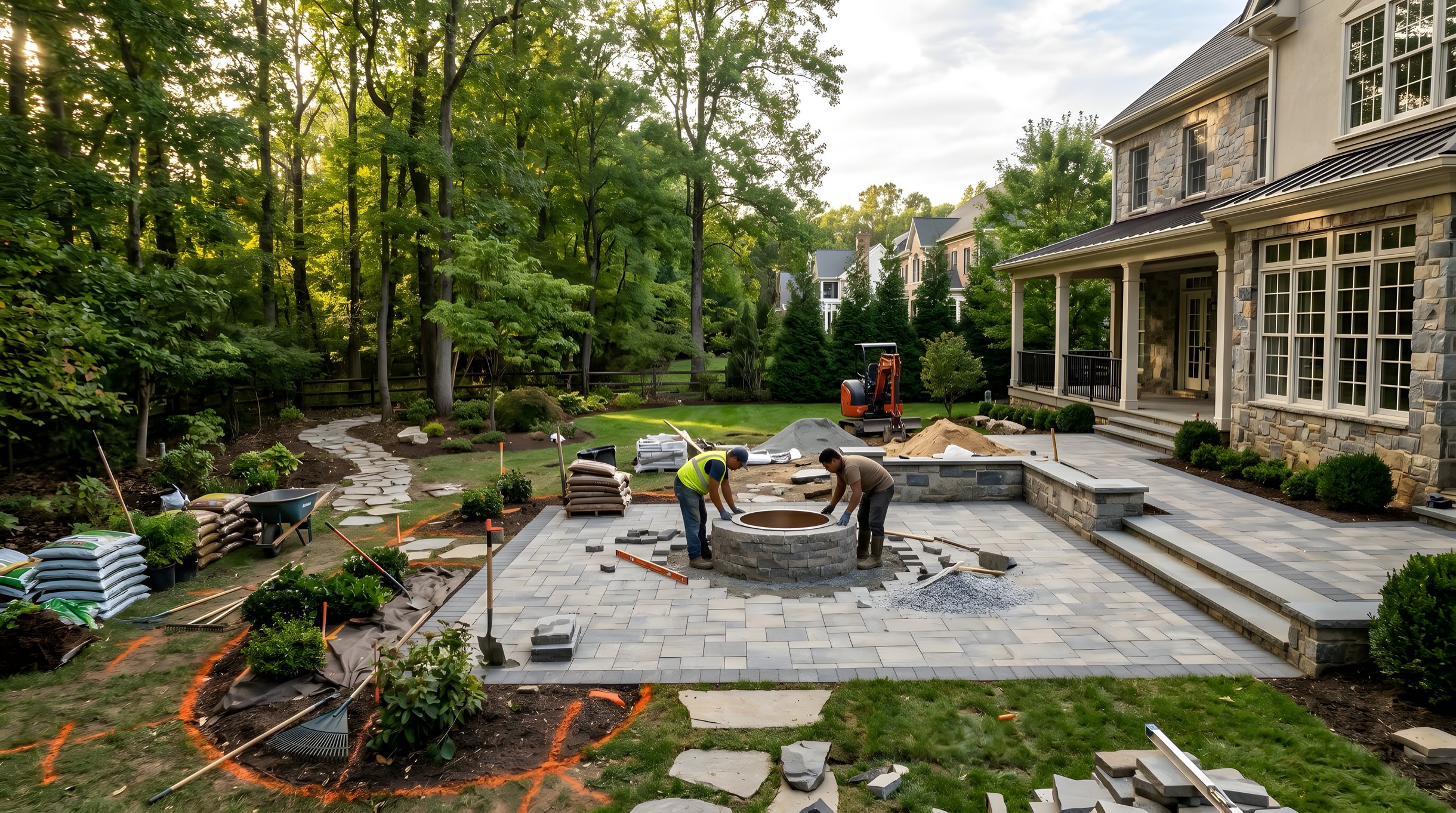
A well-built patio is the foundation of almost every outdoor living space. In Northern Virginia, the materials that hold up best through the freeze-thaw cycles of a Zone 7a winter are natural flagstone, concrete pavers, and porcelain pavers. Each has a different character, price point, and maintenance profile.
Natural flagstone feels rooted in the landscape and works particularly well on wooded lots in Great Falls and McLean. Concrete pavers are the most versatile and the most commonly specified material in the region. Porcelain pavers are increasingly popular for modern-style homes in newer Ashburn and Leesburg communities. They're extremely low maintenance and hold their color without sealing.
Patio installation in Northern Virginia typically ranges from $12 to $40 per square foot installed, depending on material and complexity. A 400-square-foot patio represents a realistic starting point for a functional outdoor dining and seating area.
Fire Pits and Fire Features
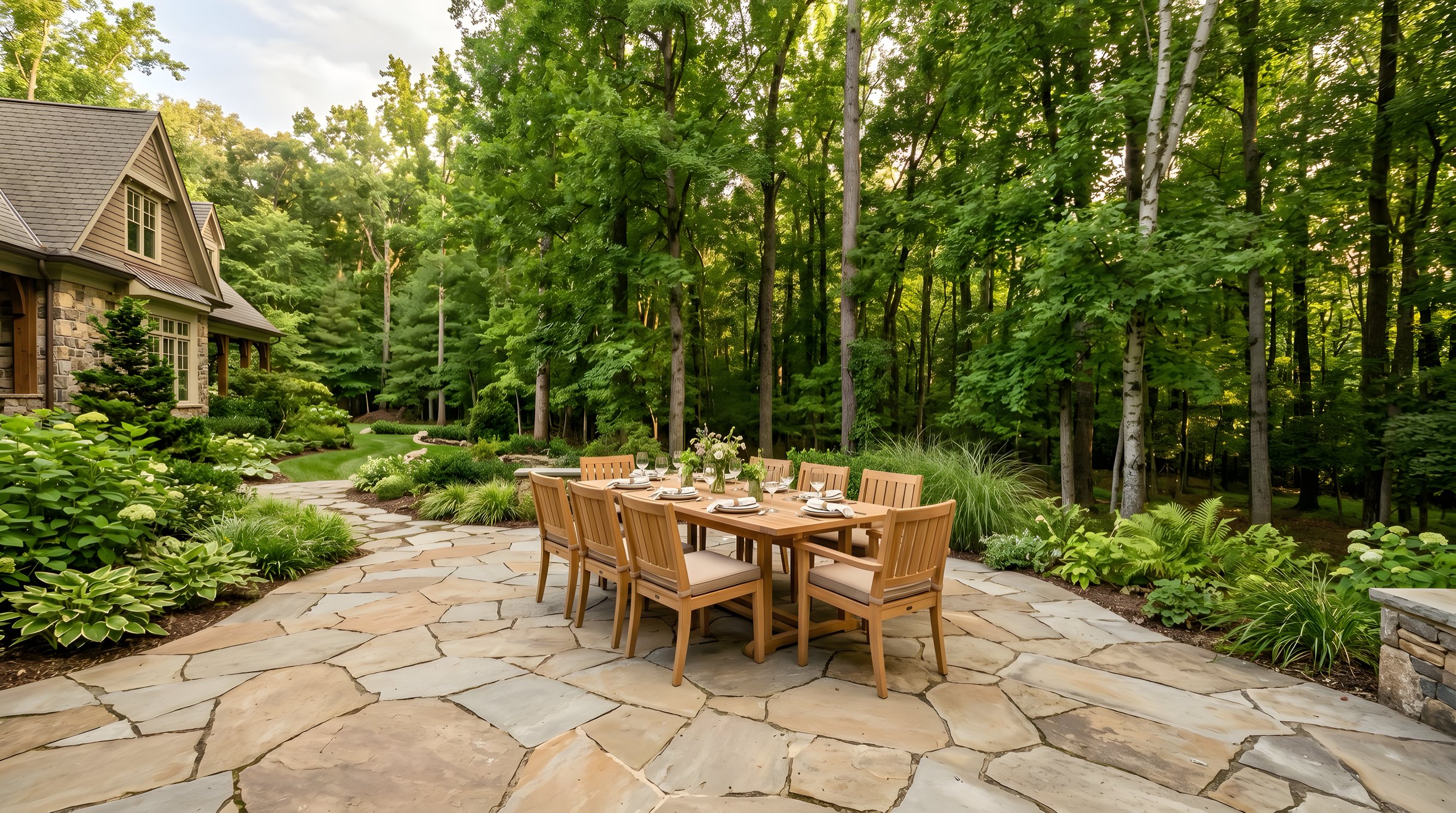
Nothing extends the outdoor season in Northern Virginia like a fire feature. Temperatures in the region drop into the 40s and 50s by October, and a well-placed fire pit or outdoor fireplace makes those evenings comfortable through November and beyond.
Built-in gas fire pits have become the most requested feature on new outdoor living projects in Fairfax and Loudoun Counties. They're clean, convenient, and require no wood storage. A linear gas fire feature built into a seat wall creates a sleek focal point that works in modern and transitional design styles alike.
Wood-burning fire pits offer a more traditional experience. Many HOA communities in Northern Virginia permit them with restrictions on setback distances and fire size. Verify your HOA guidelines before specifying any fire feature.
A professionally installed built-in fire pit in Northern Virginia typically ranges from $3,500 to $12,000 depending on size, fuel type, and surrounding seat wall construction.
Outdoor Kitchens
For homeowners in Vienna, Oakton, and McLean who entertain regularly, an outdoor kitchen changes how a backyard gets used. Grills, refrigerators, side burners, and bar seating built into a permanent structure mean cooking and hosting happen outside rather than inside with guests standing around the kitchen island waiting.
Outdoor kitchens in Northern Virginia need to be built with materials that handle humidity and temperature swings. Stainless steel appliances, sealed concrete countertops, and porcelain or natural stone cladding hold up well in this climate. Covered structures above an outdoor kitchen protect both the appliances and the guests using them.
Budget range for a Northern Virginia outdoor kitchen with a grill, refrigerator, side burner, and basic countertop runs from $15,000 to $40,000 depending on scope and finish level.
Pergolas and Shade Structures
Northern Virginia summers are hot and humid. A covered or partially shaded outdoor space dramatically increases how many hours a day that space gets used from June through August. Pergolas, shade sails, and full roofed structures all solve the same problem with different aesthetics and price points.
Cedar and aluminum pergolas are the most common specifications in this region. A freestanding cedar pergola with a footprint large enough to cover a dining table and seating area runs from $8,000 to $20,000 installed. Motorized louver systems that open and close like shutters are increasingly popular for homeowners who want both shade and stargazing from the same structure.
Seat Walls and Retaining Walls
In a region where many properties have grade changes, retaining walls solve both a structural problem and a design opportunity. A well-designed retaining wall system levels a sloped backyard for usable patio space while simultaneously creating seating, defining planting beds, and adding visual interest to the landscape.
Properties in Great Falls, McLean, and parts of Leesburg commonly have significant grade changes that, when properly addressed with retaining walls and regrading, open up large flat areas that weren't usable before. This is one of the highest-value transformations we see in Northern Virginia landscape projects.
How Do HOA Requirements Affect Outdoor Living Design in Northern Virginia?
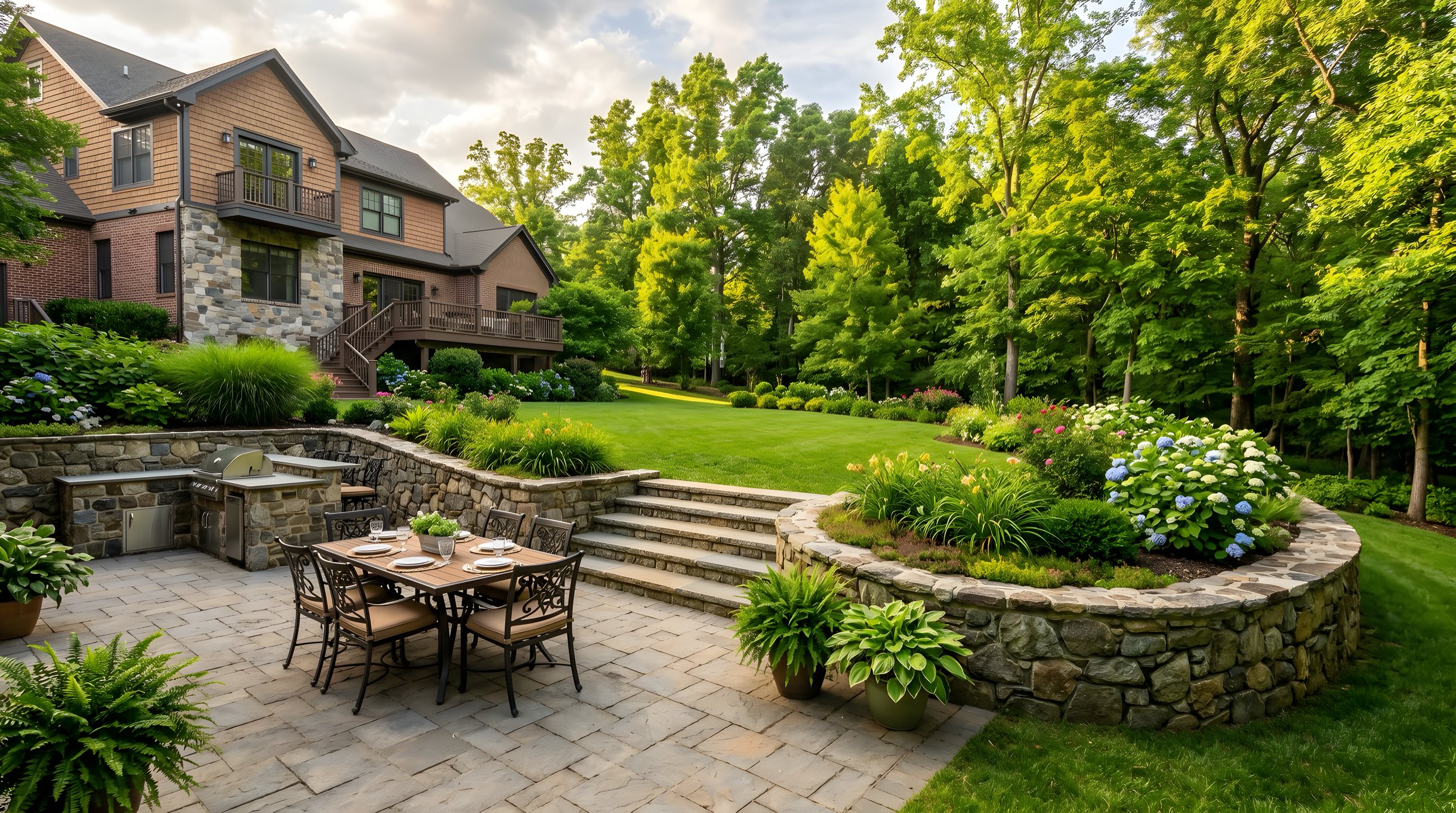
Fairfax and Loudoun Counties have hundreds of HOA communities, each with its own architectural review guidelines. These guidelines typically cover setback requirements from property lines, structure height limits, approved materials and colors, fire feature restrictions, and in some cases, the percentage of impervious surface allowed per lot.
Working with a contractor who understands HOA review processes in Northern Virginia is not optional on projects of any size. Sunrise Landscape and Design has 38 years of experience navigating these requirements across communities in Great Falls, Vienna, Oakton, Ashburn, Leesburg, and beyond. We handle the documentation and submission process so you don't have to.
The worst-case outcome of skipping the HOA approval process is a stop-work order and a requirement to remove completed work at your own expense. It happens. It's avoidable.
What Is the Best Way to Phase an Outdoor Living Project?
Not every outdoor living transformation has to happen at once. In fact, phasing a project thoughtfully often produces better results than trying to do everything in a single season.
A typical phasing approach for Northern Virginia outdoor living projects starts with the hardscape foundation, usually the patio and any retaining walls. This is the most disruptive phase and the one where site conditions have the most influence on design decisions. Getting this right first makes every subsequent phase easier.
Phase two typically adds the fire feature, outdoor kitchen, or pergola. These elements are easier to integrate when the patio is already complete and the design has been confirmed in person. Planting design, lighting, and irrigation often come last and can be added over one or two subsequent seasons without major disruption.
The value of starting this conversation with a professional early is that a good design accounts for phasing from the beginning. Conduit is run for future lighting before pavers are laid. Gas lines are stubbed out before the patio is finished. Planning for what you'll add later saves significant money compared to retrofitting.
How Much Does an Outdoor Living Space Cost in Northern Virginia?
Here's a realistic range breakdown for outdoor living projects in the Northern Virginia market:
- Entry-level patio with basic seating area: $8,000 to $18,000
- Patio with fire feature and seat walls: $20,000 to $40,000
- Full outdoor living space with patio, kitchen, pergola, and planting: $45,000 to $90,000+
- Complete backyard transformation with retaining walls, grade change, and full design-build: $75,000 to $150,000+
These ranges reflect Northern Virginia labor and material costs in the current market. Projects in Great Falls and McLean with complex sites or premium material specifications trend toward the upper end. Projects in Ashburn and Leesburg with more straightforward sites and moderate finishes are more typically in the middle of each range.
Frequently Asked Questions
What outdoor living features add the most value to a Northern Virginia home?
Patios, outdoor kitchens, and fire features consistently return strong value in Northern Virginia's premium real estate markets. A National Association of Realtors study found that landscape improvements recover more than 100% of their cost at resale in many markets. In Great Falls, McLean, and Vienna specifically, a well-executed outdoor living space is a meaningful differentiator at the time of sale.
Do I need a permit for a patio or outdoor structure in Northern Virginia?
Permits are required for structures that exceed certain size thresholds or involve electrical or gas work. In Fairfax County, patios under a certain square footage on grade typically don't require permits. Pergolas, roofed structures, and any work involving gas lines require permits. Your landscape contractor should handle permit applications as part of the project scope.
How long does outdoor living space construction take in Northern Virginia?
A patio and fire pit project typically takes one to three weeks of active construction. A full outdoor living space with kitchen, pergola, and extensive planting takes four to ten weeks depending on scope. Weather, permitting timelines, and material lead times all affect scheduling. Spring and fall are the peak installation seasons in Northern Virginia, so booking early is important.
What is the best season to start planning an outdoor living project in Northern Virginia?
The best time to start planning is winter or very early spring. Design consultations in January and February allow for permit approvals, material ordering, and contractor scheduling so that construction begins as soon as weather permits. Homeowners who wait until May to start the conversation are typically looking at late summer or fall installation at the earliest.
Can a small Northern Virginia backyard support an outdoor living space?
Yes. Some of the most impressive outdoor living transformations we've done at Sunrise are on smaller lots in Oakton, Vienna, and Ashburn. Smart design uses every square foot intentionally. A 250-square-foot patio with a built-in fire feature and well-placed planting can transform a compact yard into a space that feels twice its size.
Start Planning Your Northern Virginia Outdoor Living Space
The families we work with who have made this investment consistently tell us the same thing: they wish they'd done it sooner. The season they lose waiting is a season they don't get back.
Sunrise Landscape and Design has been designing and building outdoor living spaces across Northern Virginia for over 38 years. Mike Flickinger and the Sunrise team bring that experience to every project in Great Falls, McLean, Vienna, Oakton, Ashburn, and Leesburg.
We'll walk you through what's possible on your specific property, handle the HOA documentation, and manage every phase of the project from design through final planting.
Schedule a free consultation and let's start building the outdoor space you've been putting off. You can also explore our hardscape services and landscape design process to see more of our work.