

Fire Pit Installation: Design Ideas, Costs, and What to Know Before You Build
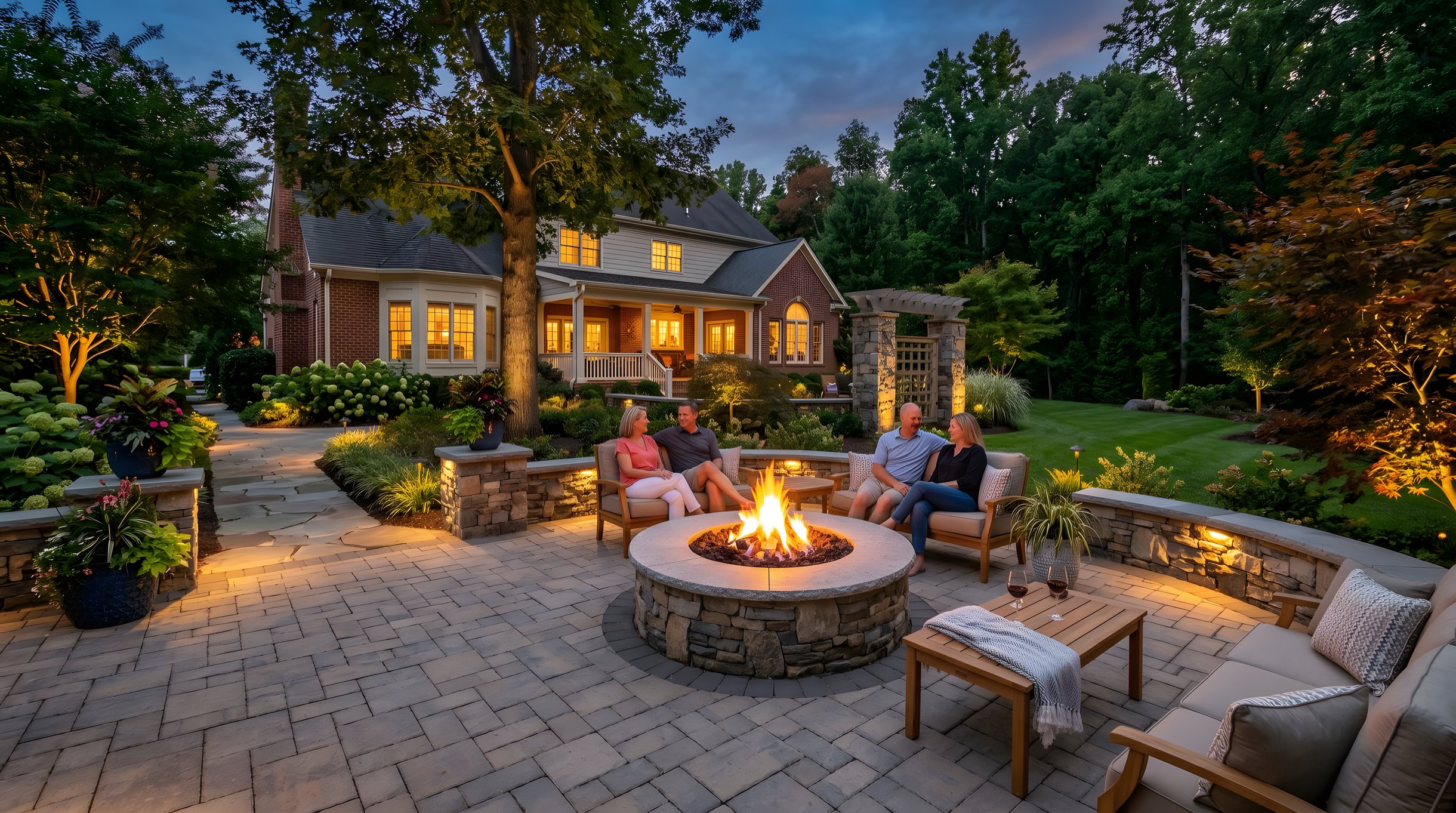
A fire pit does something no other landscape feature does. It pulls people outside on evenings when they would have stayed in. It extends the outdoor season in Northern Virginia from a few months of comfortable weather to nearly year-round use. It becomes the place where dinner winds down slowly, where conversations last longer than expected, where the family ends up on a Friday night without planning to.
It is also one of the most commonly misspecified features in residential landscape design. The wrong location. The wrong fuel type for the household. A pit surrounded by pavers that weren't planned for the heat load. A feature that looks stunning in photos and gets used twice a year because the wind always hits it wrong or it's too far from the back door.
This guide covers what you need to know before you install a fire pit on your Northern Virginia property, including design types, placement decisions, cost ranges, permit considerations in Fairfax and Loudoun Counties, and what to look for in the contractor you hire.
- Placement is the most important decision in fire pit installation. Get it wrong and you have a feature you don't use. Get it right and you have the center of your outdoor life.
- Gas fire pits are the most commonly requested feature on Northern Virginia outdoor living projects because of their convenience and year-round usability.
- HOA and county regulations in Fairfax and Loudoun govern fire pit type, setbacks, and in some cases fuel type. Verify these requirements before committing to a design.
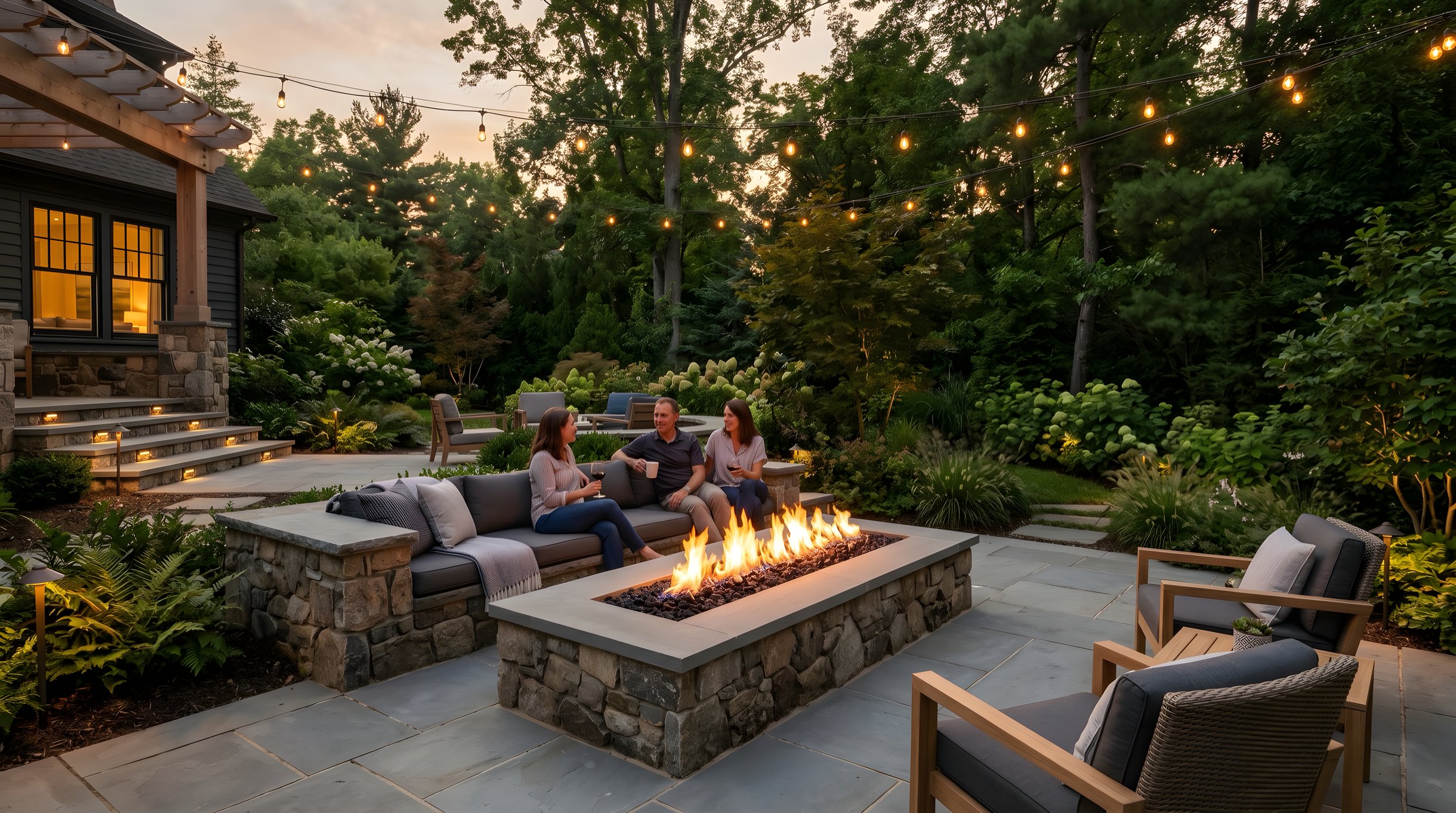
- Built-in fire features integrated into patio and seat wall design produce the most cohesive and valuable outdoor living spaces.
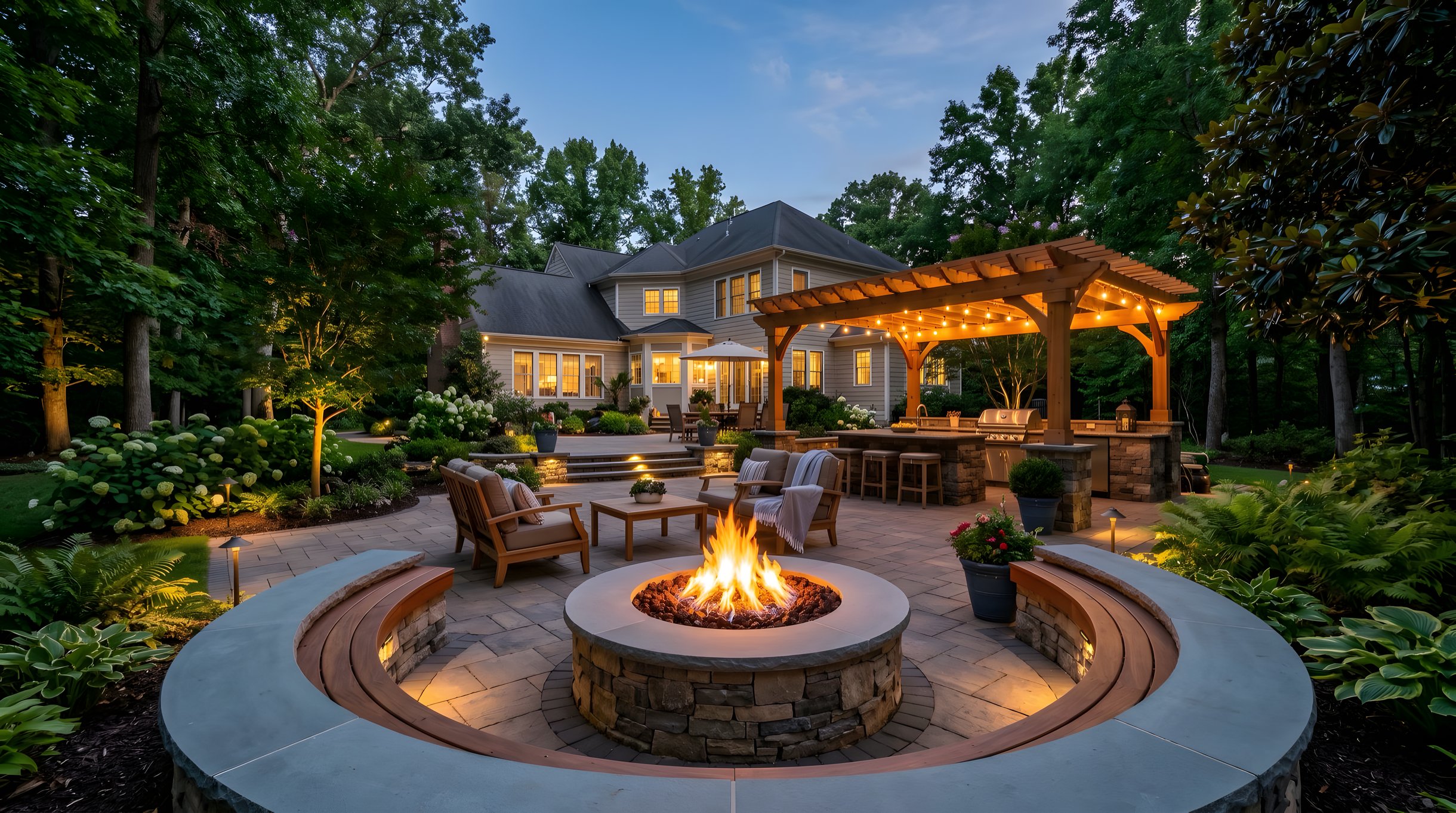
- A fire pit should be designed as part of the overall outdoor space, not added as an afterthought. Integration with patio layout, seat walls, and landscaping determines how well it works.
What Type of Fire Pit Is Right for Your Northern Virginia Property?
The first decision is fuel type. It shapes every design, installation, and use decision that follows.
Gas Fire Pits
Natural gas and propane fire pit installations have become the dominant choice for new outdoor living projects across Northern Virginia. The reasons are practical. Gas fires ignite with the turn of a switch or the press of a button. There is no wood to source, no ash to clean, no smoke that shifts with the wind and drives your guests inside. The flame level is adjustable. The feature is usable on a Tuesday evening in October for thirty minutes without the effort of building and managing a wood fire.
Natural gas-connected fire pits eliminate the need for propane tank management and refilling. Running a gas line to the patio during the installation phase is significantly less expensive than retrofitting one later. If natural gas service is available at your property in Fairfax or Loudoun County, this is worth discussing with your landscape contractor during the design phase.
Propane fire pits are appropriate where natural gas is not available or where the homeowner prefers a portable option. A dedicated propane line run to a built-in feature, with a below-grade tank, provides convenience comparable to natural gas. Above-grade propane tanks connected to decorative fire bowl features are the simplest installation but the least integrated aesthetically.
Wood-Burning Fire Pits
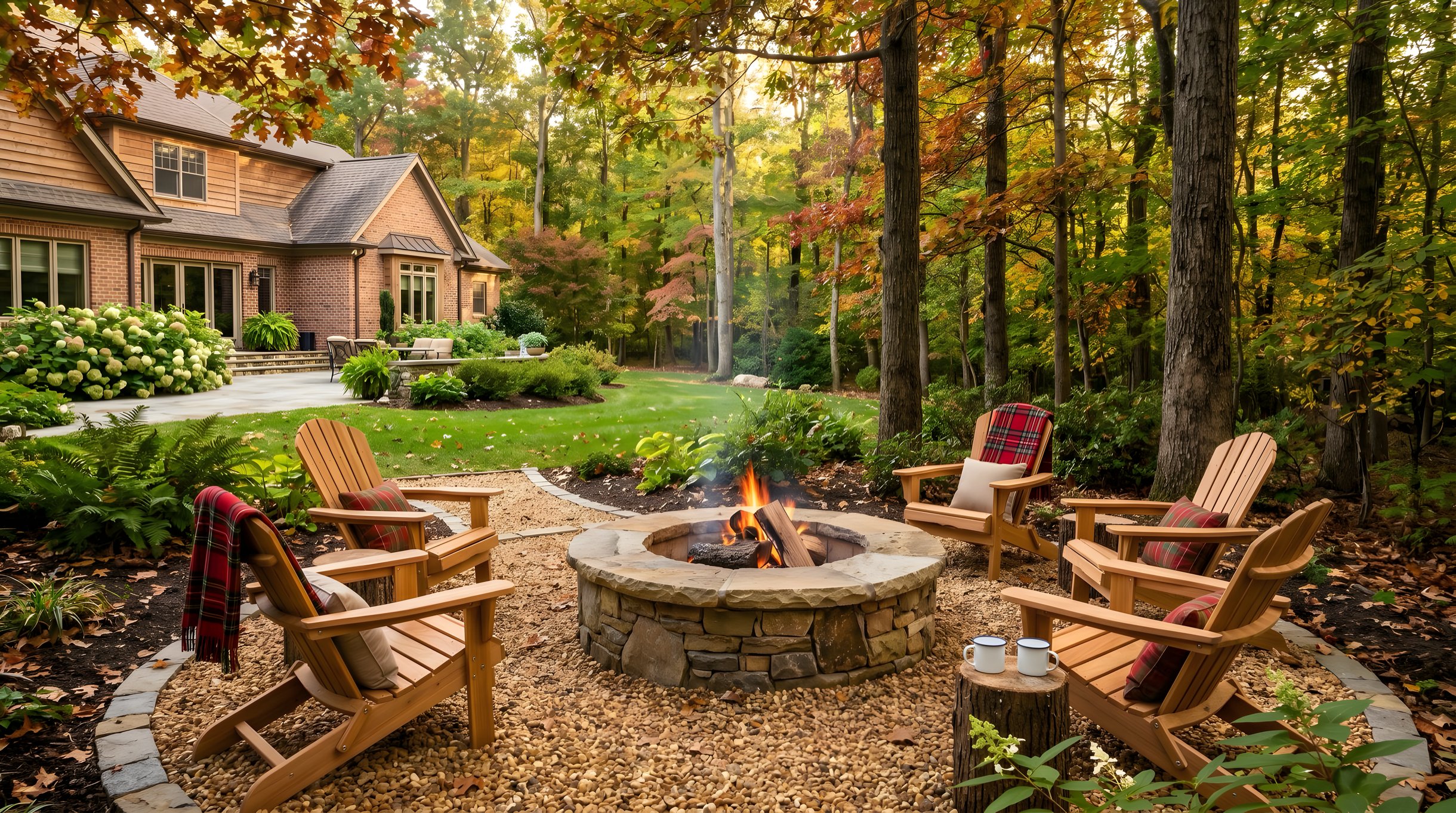
Wood-burning fire pits deliver an experience that gas cannot replicate: crackling wood, visible flame behavior, and the smell of a real fire. For homeowners who want that experience and are willing to manage the operational requirements, a properly built wood-burning pit is a meaningful addition to a Northern Virginia outdoor space.
The operational considerations are real. Wood needs to be sourced and stored. Ash needs to be cleaned regularly. Spark and ember management matters, particularly on properties with overhanging trees or wood decking. Wind direction affects the smoke experience significantly, which makes placement even more critical for wood-burning features than for gas.
Many HOA communities in Northern Virginia restrict or prohibit wood-burning fire features. Verify your community's rules before designing a wood-burning pit into your project.
Fire Tables and Fire Bowls
For homeowners who want a fire feature without full built-in construction, fire tables and fire bowls offer a middle ground. High-quality gas fire tables with cast stone or concrete fiber surrounds can be built into a patio design semi-permanently or positioned as freestanding features. They range from decorative accessories to substantial design elements depending on the product and the installation approach.
Where Should a Fire Pit Be Placed in a Northern Virginia Backyard?
Placement is the decision that determines whether a fire pit becomes the center of your outdoor social life or a feature you walk past without using. It is also the decision most frequently made wrong when homeowners design fire features without professional guidance.
Distance from Structures
Most building codes and HOA guidelines in Northern Virginia require a minimum distance between any fire feature and any structure, including the house, fences, and overhead structures like pergolas. Typical requirements range from 10 to 25 feet depending on the jurisdiction and the fuel type. Verify the requirements for your specific location before finalizing placement.
Wind Patterns
Spend time in your backyard at the time of day you expect to use a fire feature and note which direction the breeze typically comes from. Positioning seating on the upwind side of the fire significantly reduces smoke exposure for wood-burning features and improves the overall comfort of the space. A designer who doesn't account for prevailing wind direction in their fire pit placement recommendation has not thought about how the space will actually function.
Connection to the House
A fire feature positioned too far from the house becomes a destination rather than a natural extension of daily use. The features that get used most frequently are the ones close enough to the back door to use without committing to an evening outdoors. A fire pit that takes a 60-second walk across the property to reach gets used on special occasions. One that's visible from the kitchen and steps from the back door gets used on a Wednesday.
Integration with Seating
A fire pit without dedicated seating integrated into the design is a feature in search of chairs that never quite work right. Built-in seat walls that define the seating zone around the fire, set at the right height and distance from the flame, produce a space that functions immediately and consistently. Moveable chairs work but require setup every use and tend to scatter over time.
How Much Does Fire Pit Installation Cost in Northern Virginia?
Fire pit installation costs in Northern Virginia vary based on fuel type, level of build, integration with surrounding hardscape, and contractor.
- Simple in-ground wood-burning fire pit with paver or stone surround: $2,500 to $6,000
- Built-in gas fire pit with paver surround and basic seat wall: $6,000 to $14,000
- Premium built-in gas fire feature with custom stone or concrete surround, integrated seat walls, and complete patio integration: $15,000 to $35,000+
- Gas line installation (if not already present): $800 to $2,500 depending on run length and site conditions
These ranges reflect Northern Virginia's current labor and material costs. Projects that include the fire pit as part of a larger patio or outdoor living space installation often achieve better value on the fire feature because the surrounding hardscape, grading, and drainage work is already part of the scope.
What Permits and HOA Approvals Apply to Fire Pit Installation in Northern Virginia?
Permit requirements for fire pit installation in Fairfax and Loudoun Counties depend on the type of feature and its installation. Gas line connections require a mechanical permit and inspection in most jurisdictions. Built-in fire features that are part of a larger patio project may be covered under the patio permit or may require their own review depending on how the project is classified.
HOA requirements are often more restrictive than county codes. Many communities across Northern Virginia prohibit open wood-burning features entirely or limit them to specific types, sizes, and setback distances. Gas fire features are generally permitted in most communities but may require architectural review committee approval before installation. Some communities have specific requirements about the visual appearance of gas lines and tanks.
Sunrise Landscape and Design handles permit applications and HOA submissions as part of every project that requires them. We've been navigating these approval processes across Fairfax and Loudoun Counties for over 38 years, and we treat it as our responsibility, not yours.
What Should You Ask a Contractor Before Hiring for Fire Pit Installation?
Not every hardscape contractor has genuine experience with fire feature installation. Gas connections require licensed plumbing or gas work. Electrical components in automatic ignition systems require appropriate licensing. The heat management requirements of a built-in fire feature affect the materials specified for surrounding surfaces.
- Do you hold a Class A contractor license in Virginia, and do you handle gas line permitting in-house?
- How do you specify surrounding paver or stone materials to account for heat from the fire feature?
- Can you show me examples of completed fire pit installations you've done in Northern Virginia?
- How do you handle HOA approvals if they're required for this project?
- What warranty do you offer on the installation, and what does it cover?
Frequently Asked Questions
Can I add a fire pit to an existing patio in Northern Virginia?
Yes, with some considerations. A gas fire pit can be added to an existing patio if a gas line can be run to the location and the surrounding surface materials can handle the heat. A wood-burning fire pit built into an existing patio requires more significant modification to create safe clearance distances and appropriate surface materials around the fire area. A site assessment will determine what's feasible and what modifications are required.
What is the best season to install a fire pit in Northern Virginia?
Spring and fall are the best seasons for fire pit installation in Northern Virginia. Spring installation has the advantage of getting the feature ready for summer and fall use. Fall installation means the feature is ready for immediate use and typically involves less scheduling competition than peak spring season. Winter installation is possible during mild periods but weather windows are less predictable.
How do I maintain a built-in gas fire pit in Northern Virginia?
Gas fire pit maintenance involves annual inspection of the gas connections and burner assembly, cleaning of the burner ports if they become obstructed, replacement of the glass or lava rock media if it discolors over time, and winter shutdown and cover placement to protect the feature from debris and moisture accumulation. Most professional gas fire pit manufacturers recommend annual service by a qualified technician.
What is the difference between a fire pit and an outdoor fireplace?
A fire pit is an open feature with flame visible from all directions, typically surrounded by seating on three or four sides. An outdoor fireplace is a vertical structure with a firebox and chimney that directs flame and smoke upward and concentrates radiant heat in one direction. Outdoor fireplaces work better for smaller seating areas with a clear front orientation. Fire pits work better for larger groups seated in a circle. Both are popular on Northern Virginia outdoor living projects.
How far in advance should I plan a fire pit installation in Northern Virginia?
For a spring installation, start conversations with your landscape contractor in January or February. Spring is the peak season for outdoor living projects across Northern Virginia, and qualified contractors book out quickly. A fire pit that's part of a larger patio or outdoor living project requires a design process and potentially a permit that takes additional lead time. Starting early gives you the most flexibility in scheduling and material selection.
Build the Outdoor Space That Finally Gets Used Every Week
The families we've worked with who added a well-designed fire feature to their Northern Virginia property consistently tell us the same thing: it changed how they use their entire backyard. The patio that sat empty on weeknight evenings became the place they'd rather be.
Sunrise Landscape and Design designs and builds fire pit installations across Northern Virginia as part of our full outdoor living service offering. We handle design, permitting, HOA approvals, gas line coordination, and installation. Mike Flickinger and the Sunrise team have been doing this work in Great Falls, McLean, Vienna, Oakton, Ashburn, and Leesburg for over 38 years.
Schedule a free consultation with Sunrise Landscape and Design and let's design an outdoor space you'll use every week. Explore our hardscape portfolio, outdoor living design ideas, and backyard design guide for more inspiration.