

Landscape Installation and Maintenance: How to Plan Your Northern Virginia Outdoor Project
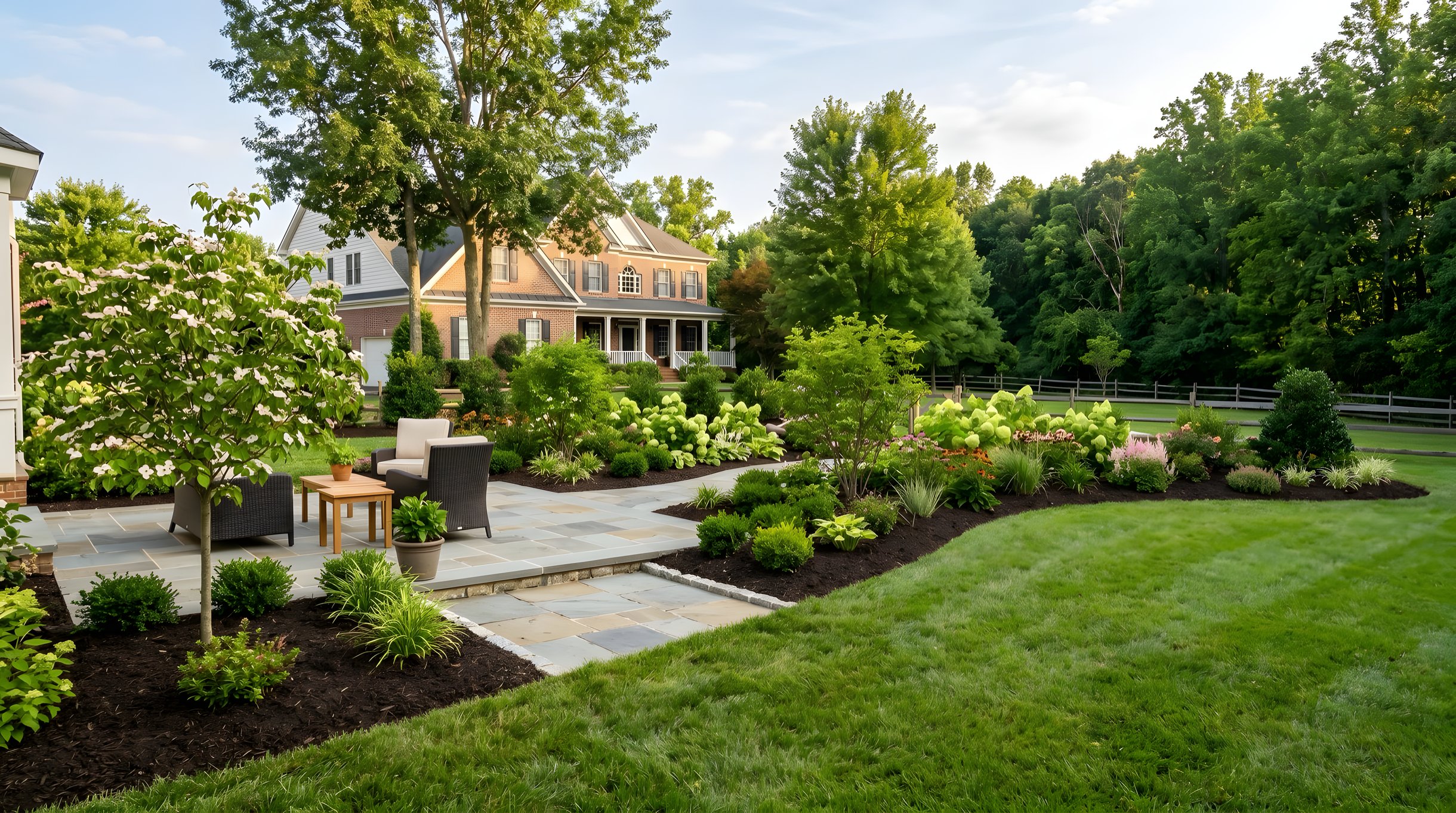
Most homeowners think about landscape installation and landscape maintenance as two separate decisions. Installation is the project. Maintenance is the thing you figure out after the project is done.
That's backwards. The two are inseparable, and treating them as sequential rather than integrated is one of the most expensive mistakes you can make on a landscape project in Northern Virginia.
This guide explains how installation and maintenance decisions affect each other, what to plan for before your project begins, and how Sunrise Landscape and Design's full-lifecycle approach protects the investment you make in your outdoor space.
- Maintenance requirements should be defined before installation begins. Plant selection, hardscape choices, and irrigation design all affect long-term maintenance costs.
- The first year after installation is the most critical for plant establishment. What happens during this period determines whether a new landscape thrives or struggles.
- Northern Virginia's clay soils, deer pressure, and seasonal extremes require maintenance approaches specifically calibrated to this region.
- Ongoing maintenance by the installing company produces better long-term outcomes than handing a new installation to a separate maintenance crew.
- A well-planned and well-maintained landscape in Northern Virginia is a compounding asset. It looks better every year, not the same.
Why Do Installation and Maintenance Need to Be Planned Together?
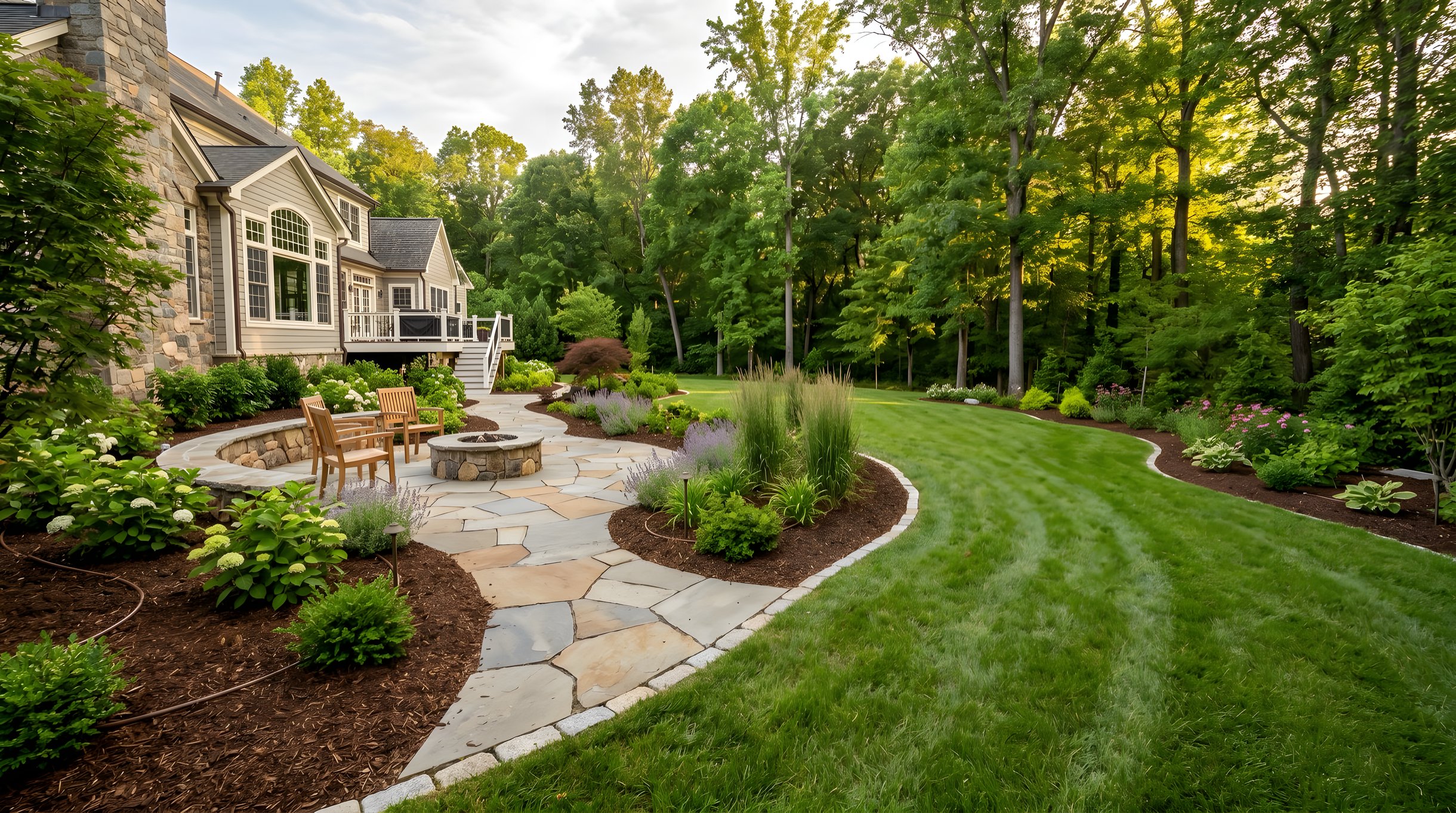
Every decision made during the design and installation phase has a maintenance consequence that extends for the life of the landscape. The plant species selected affect how much pruning and division the beds require each year. The hardscape materials chosen affect how much sealing, cleaning, or joint sand replenishment is needed over time. The irrigation system design affects water use, coverage gaps, and seasonal maintenance requirements.
A homeowner who installs a beautiful landscape with high-maintenance plant species and no irrigation system, then tries to maintain it with a once-a-week lawn service that doesn't have the expertise to manage ornamental beds, is going to see that landscape deteriorate within two to three growing seasons. The installation investment gets eroded by inadequate maintenance planning.
The opposite is also true. A well-designed landscape that accounts for long-term maintenance from the beginning, then gets maintained by a qualified company that knows what it's managing, looks better with each passing year. The plants fill in. The hardscape weathers gracefully. The investment compounds.
What Should You Decide About Maintenance Before Installation Begins?
There are decisions that can only be made effectively before installation, not after. Here is what every Northern Virginia homeowner should be clear on before a single plant goes in the ground.
Maintenance Level You Want to Commit To
Landscapes exist on a spectrum from low-maintenance to high-maintenance. A low-maintenance landscape in Northern Virginia uses native or adapted plants that require minimal pruning, minimal irrigation once established, and minimal bed management after the first establishment season. A high-maintenance landscape with formal hedges, annual color rotation, and a diverse species mix requires significantly more time and expertise to keep looking its best.
Neither is wrong. But you need to know which end of that spectrum you're designing toward, because the plant palette, the bed structure, and the irrigation system all change based on the answer. A designer who doesn't have this conversation with you before specifying plants has not done their job.
Irrigation Infrastructure
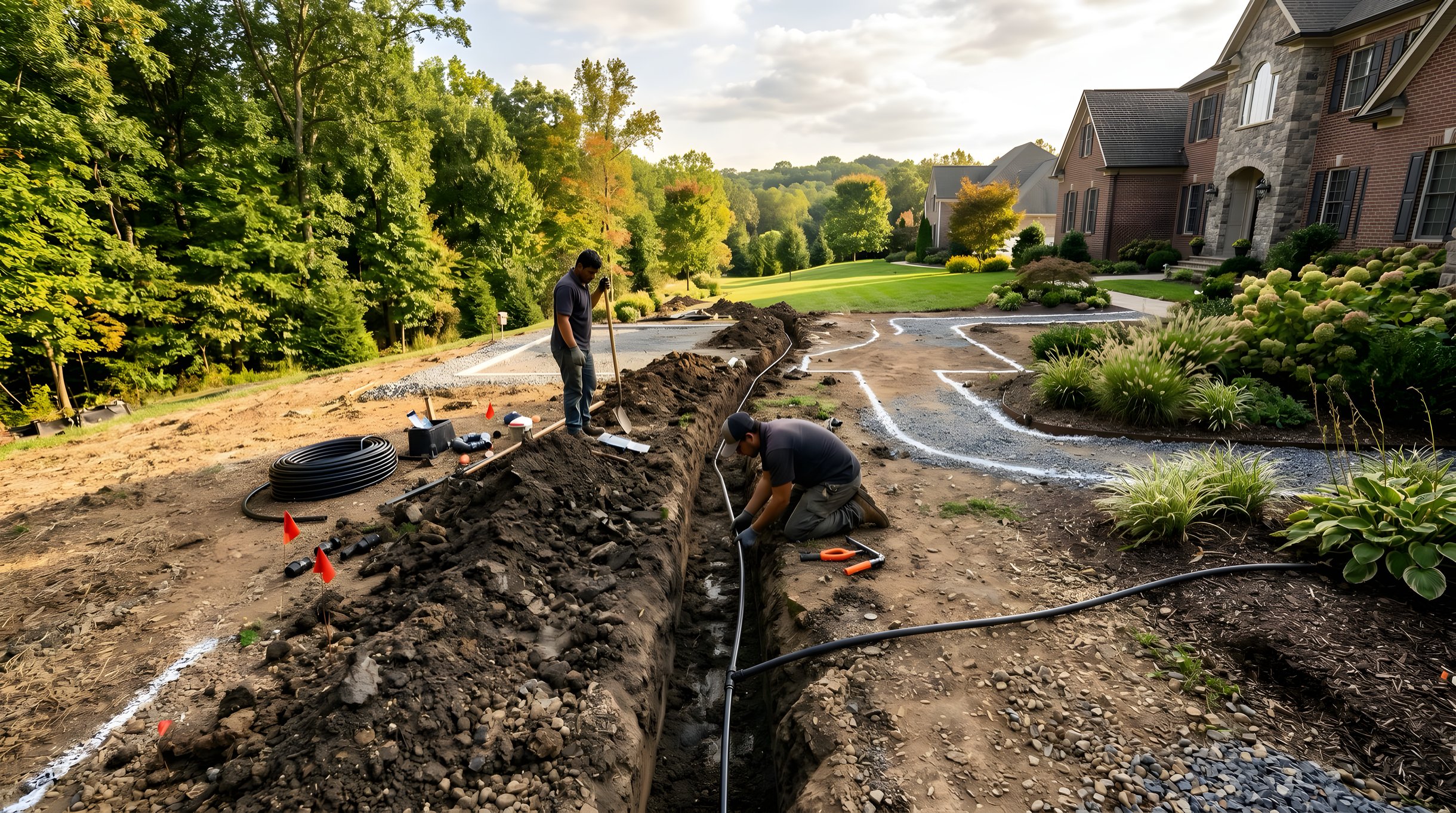
Installing irrigation conduit and main lines before hardscape and grading is complete saves significant cost compared to retrofitting later. Even if you're not installing a full irrigation system at the time of the landscape installation, deciding now whether you want the option later allows your contractor to run conduit and stub out valve locations without disrupting finished surfaces.
In Northern Virginia's summer heat, newly installed plants without irrigation support require hand watering on a schedule that most homeowners don't realistically maintain. Plants that don't establish in the first season struggle or fail. Incorporating irrigation at the installation phase is almost always a better investment than losing a third of your plant material in year one.
Lighting Conduit
Landscape lighting has become one of the highest-value additions to Northern Virginia residential properties. Low-voltage LED systems that illuminate planting beds, path edges, and architectural features extend how long a property is usable and enjoyable after dark. They also contribute meaningfully to curb appeal and security.
Running conduit for future lighting during the installation phase costs almost nothing if the ground is already being worked. Adding it after the patio is laid and the beds are planted requires reopening finished surfaces. Plan for lighting during installation even if you don't install the fixtures until a later phase.
Drainage Solutions
Northern Virginia's clay soils have poor drainage characteristics. Properties in Great Falls, McLean, and parts of Leesburg commonly have areas of consistent standing water after rainfall that affect both plant health and the usability of outdoor spaces. Addressing drainage at the installation phase is dramatically less expensive than addressing it after hardscape is complete.
A proper installation includes a drainage assessment during the design phase. French drains, dry creek beds, regrading, and downspout extensions should be specified and installed before pavers go down, not as a remediation project after water problems become visible.
What Does the First Year After Landscape Installation Look Like?
The first growing season after a landscape installation is the most critical. Plants are establishing root systems, adapting to their specific site conditions, and going through the transition from nursery growing conditions to your property's specific soil, sun, and moisture environment. What happens during this season has a lasting effect on the long-term health and appearance of the landscape.
Watering Requirements
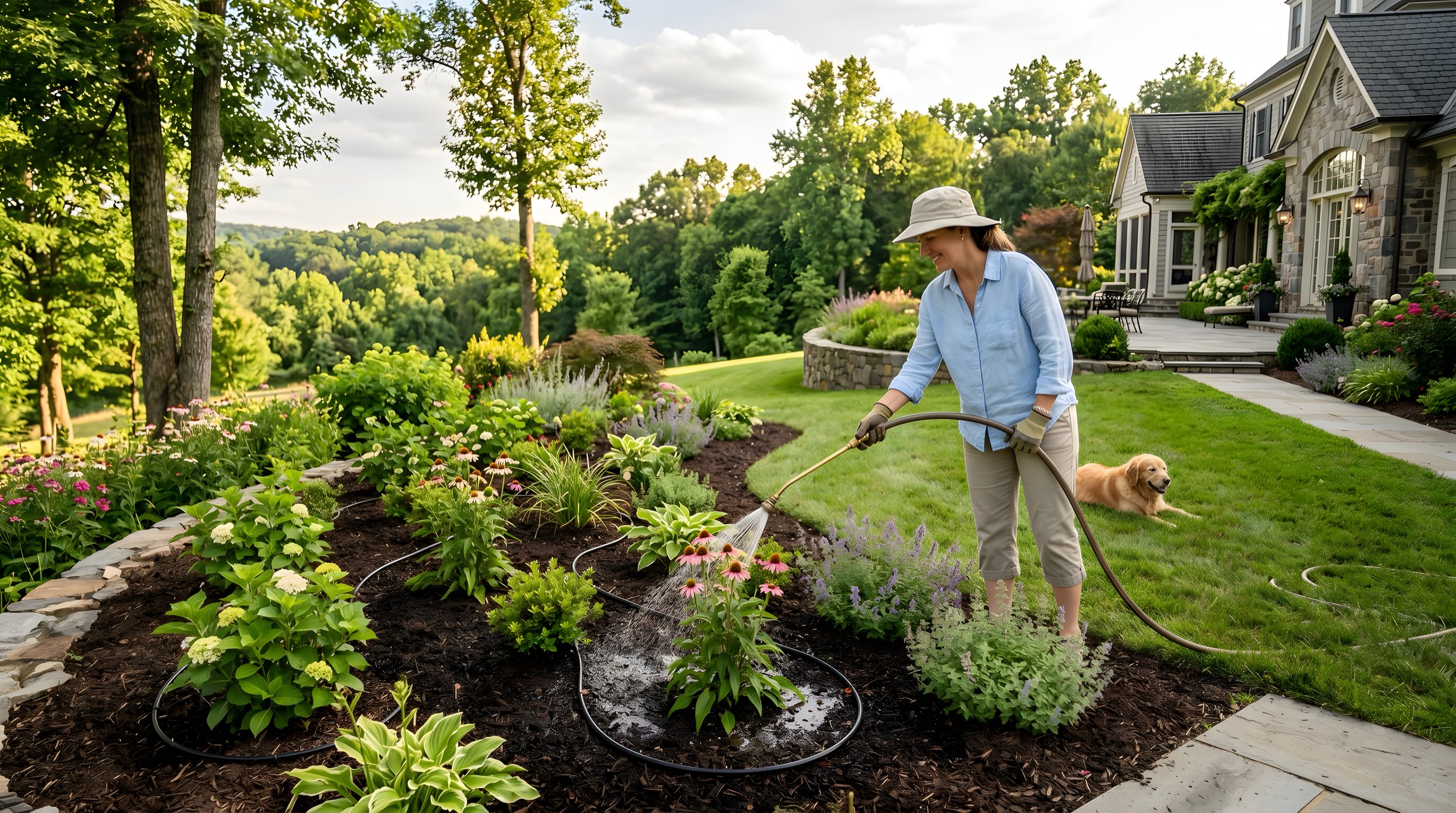
New plantings in Northern Virginia typically require supplemental watering through the first full growing season, even in years with normal rainfall. Clay soils can repel water when dry and hold too much when wet, making it easy to both underwater and overwater new plants if you're not calibrated to the specific conditions of your property.
Your landscape contractor should provide specific watering guidance for your plantings at the time of installation. Follow it. The plants that fail in year one almost always fail because of inadequate water management during establishment, not because of anything wrong with the design.
Fertilization and Soil Building
New plantings in Northern Virginia's clay-heavy soils benefit from fertilization programs that support root development through the first season and build organic matter in the bed soil over time. This is not something to leave to chance or to a general lawn maintenance crew that applies a standard fertilizer schedule regardless of what was recently planted.
Sunrise Landscape and Design provides first-year maintenance guidance for every installation project. We want the landscape we installed to look better each year, which means we don't hand off the property after the final payment and wish the homeowner luck.
Plant Warranty Management
Most professional landscape installation companies warrant new plantings through at least the first growing season. Understanding what the warranty covers, how to document losses, and what the process for replacement looks like before problems arise is important. Warranties are only useful if you know how to use them.
How Does an Ongoing Maintenance Program Protect Your Installation Investment?
A landscape installation is a significant investment. In Northern Virginia, a mid-size design-build project represents $20,000 to $60,000 or more. That investment has a maintenance requirement that, unmet, produces visible deterioration within one to two growing seasons.
The compounding benefit of consistent, expert maintenance is the reverse. Each year of proper care, the plants are more established and more vigorous. Bed structure is cleaner. The hardscape ages gracefully with appropriate care. The landscape value increases alongside the property value it supports.
The landscape maintenance programs that produce this outcome in Northern Virginia are the ones managed by companies that understand what they're maintaining. Sunrise Landscape and Design maintains the properties we install because the transition from installation to maintenance is not a handoff to a different service. It's a continuation of the same professional relationship.
Frequently Asked Questions
How much should I budget for maintenance after a landscape installation in Northern Virginia?
A general rule is to budget 10 to 15 percent of the installation cost annually for ongoing maintenance in the first few years after installation. For a $40,000 installation, that's $4,000 to $6,000 per year for a comprehensive maintenance program. This is a rough guide. Actual maintenance costs depend on property size, plant complexity, and service frequency.
Can the same company that installed my landscape also maintain it long-term?
Yes, and it's typically the better choice. Sunrise Landscape and Design offers ongoing maintenance programs for properties we install. The continuity of knowledge about your property, including what was planted, how the drainage was designed, and what areas have had issues, translates directly into more attentive and effective maintenance over time.
What are the most common installation mistakes that create long-term maintenance problems?
Inadequate drainage preparation is the most costly and common mistake in Northern Virginia. Planting species that are not matched to the site's actual light and soil conditions creates ongoing replacement cycles. Installing hardscape without proper base preparation creates settling and heaving issues. All of these are preventable with proper site analysis and a thorough design process before installation begins.
How long does it take for a new landscape installation to look fully established in Northern Virginia?
Most newly installed landscapes in Northern Virginia reach full visual maturity two to four years after installation, depending on the plant sizes specified and the site conditions. Shrubs planted at three-gallon size may take two to three seasons to reach their intended form. Trees take longer. Specifying larger plant material at installation accelerates the timeline but increases upfront cost.
Plan Your Northern Virginia Landscape Installation and Maintenance the Right Way
Sunrise Landscape and Design has been designing, installing, and maintaining landscapes across Northern Virginia for over 38 years. We approach every project as a long-term investment in your property, which means we think about maintenance from the moment design begins.
Mike Flickinger and the Sunrise team work with homeowners in Great Falls, McLean, Vienna, Oakton, Ashburn, Leesburg, and throughout Fairfax and Loudoun Counties to create outdoor spaces that look great the day they're installed and better every year after that.
Schedule a consultation with Sunrise Landscape and Design to start planning your project. Explore our design services, maintenance programs, and drainage solutions.