

Landscape Design and Build: What the Process Really Looks Like (Start to Finish)
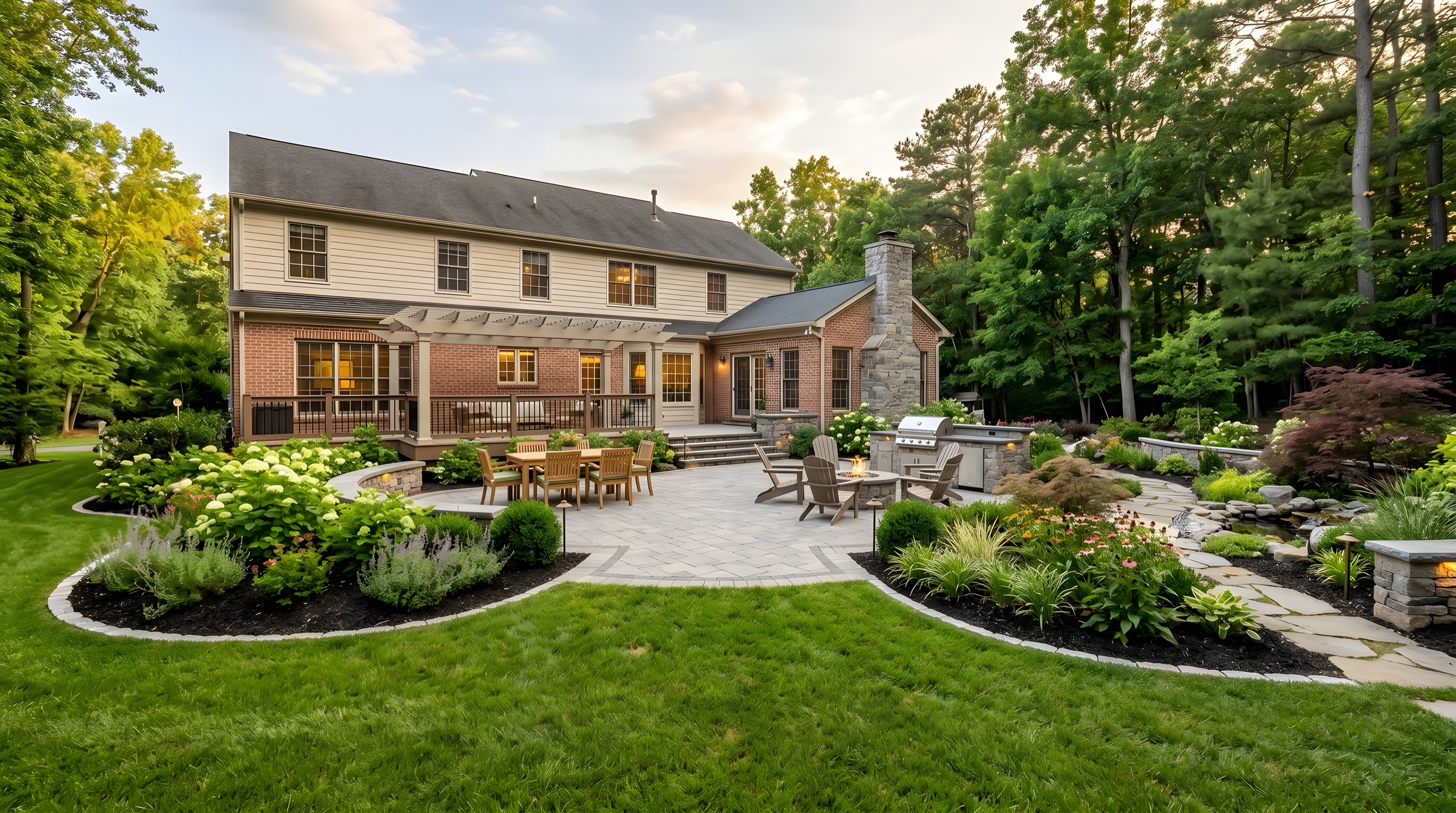
One of the most common things we hear from Northern Virginia homeowners before they hire us is that they don't know what to expect. They've seen beautiful finished landscapes. They have a general sense of what they want. But the process between "I'd like to transform my backyard" and "here is the finished patio" is a complete mystery.
That mystery is a problem. When homeowners don't know what the process looks like, they can't evaluate whether a contractor is following a real professional process or making things up as they go. They can't spot the step being skipped that will cost them later. And they can't hold a contractor accountable for communication they never knew they were owed.
This guide documents the full landscape design and build process as it should work. If a company you're considering can't describe a process that looks something like this, that's important information.
- A professional landscape design and build process has distinct, documented phases. Each one feeds into the next.
- The design phase is where trust is built. You should see exactly what will be built before a shovel touches your property.
- Communication should be structured and proactive, not reactive. You shouldn't have to chase your contractor for updates.
- Changes happen in every project. A good contract specifies how they're handled before they come up.
- The relationship doesn't end at project completion. A professional company follows up and stands behind their work.
What Is a Landscape Design and Build Company?
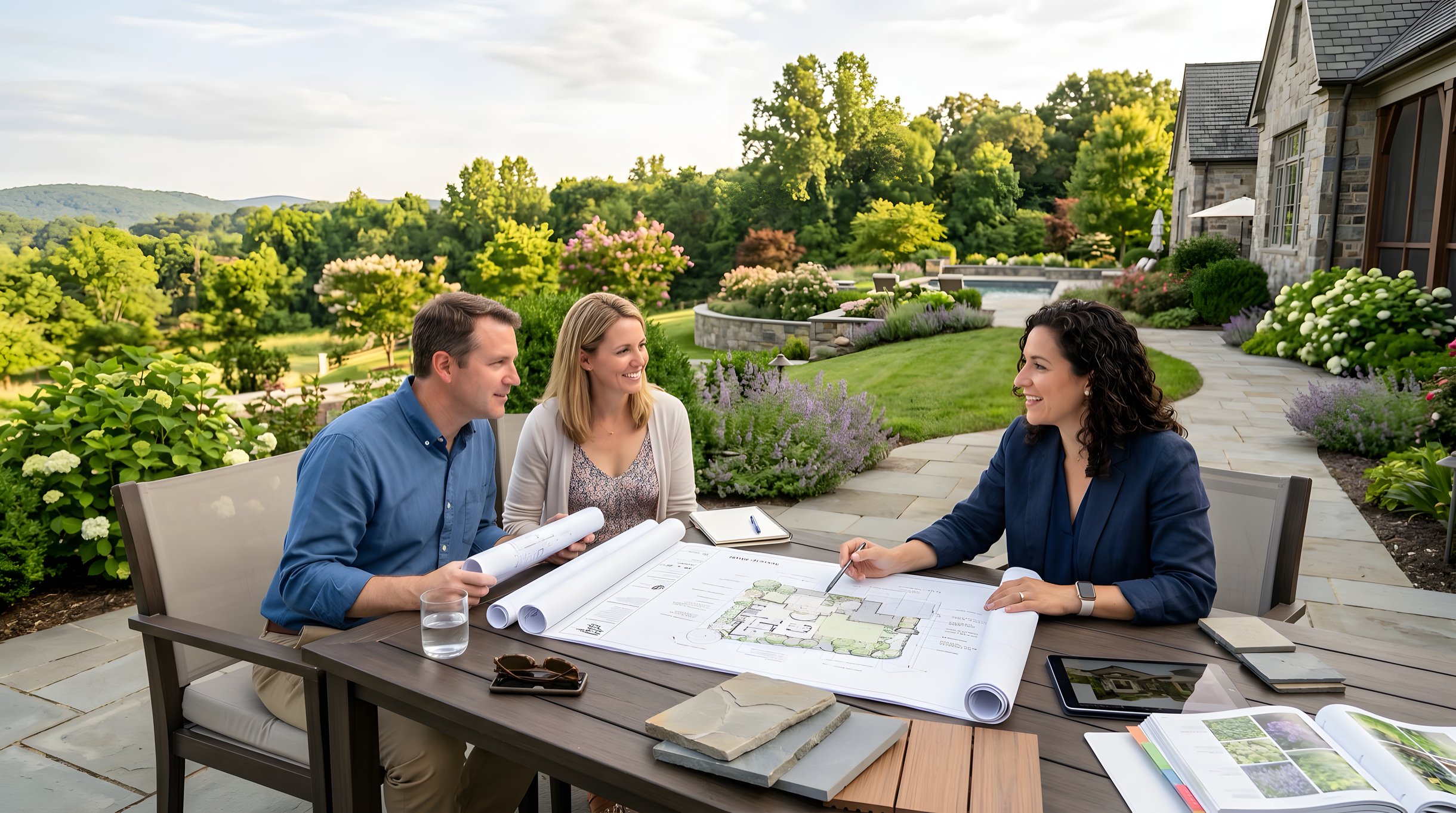
A design-build landscape company handles both the design process and the physical installation under a single contract. This is different from hiring a landscape architect separately and then finding a contractor to execute the plans. With a design-build firm, the team that designs your project is the same team that builds it, or works directly with the crews doing the installation.
This matters for a simple reason. When design and construction are separated, things get lost in translation. The designer specifies a material that the contractor substitutes for something cheaper. The drainage solution drawn on paper doesn't account for a site condition the contractor noticed but didn't bother communicating. The planting plan calls for a specific species that nobody thought to verify is available.
With a design-build firm, those gaps close because the same people who made the design decisions are accountable for the construction decisions. Sunrise Landscape and Design has operated as a design-build firm in Northern Virginia for over 38 years. That continuity from concept through completion is one of the things our clients consistently credit for the quality of the finished result.
What Happens During the Initial Consultation?
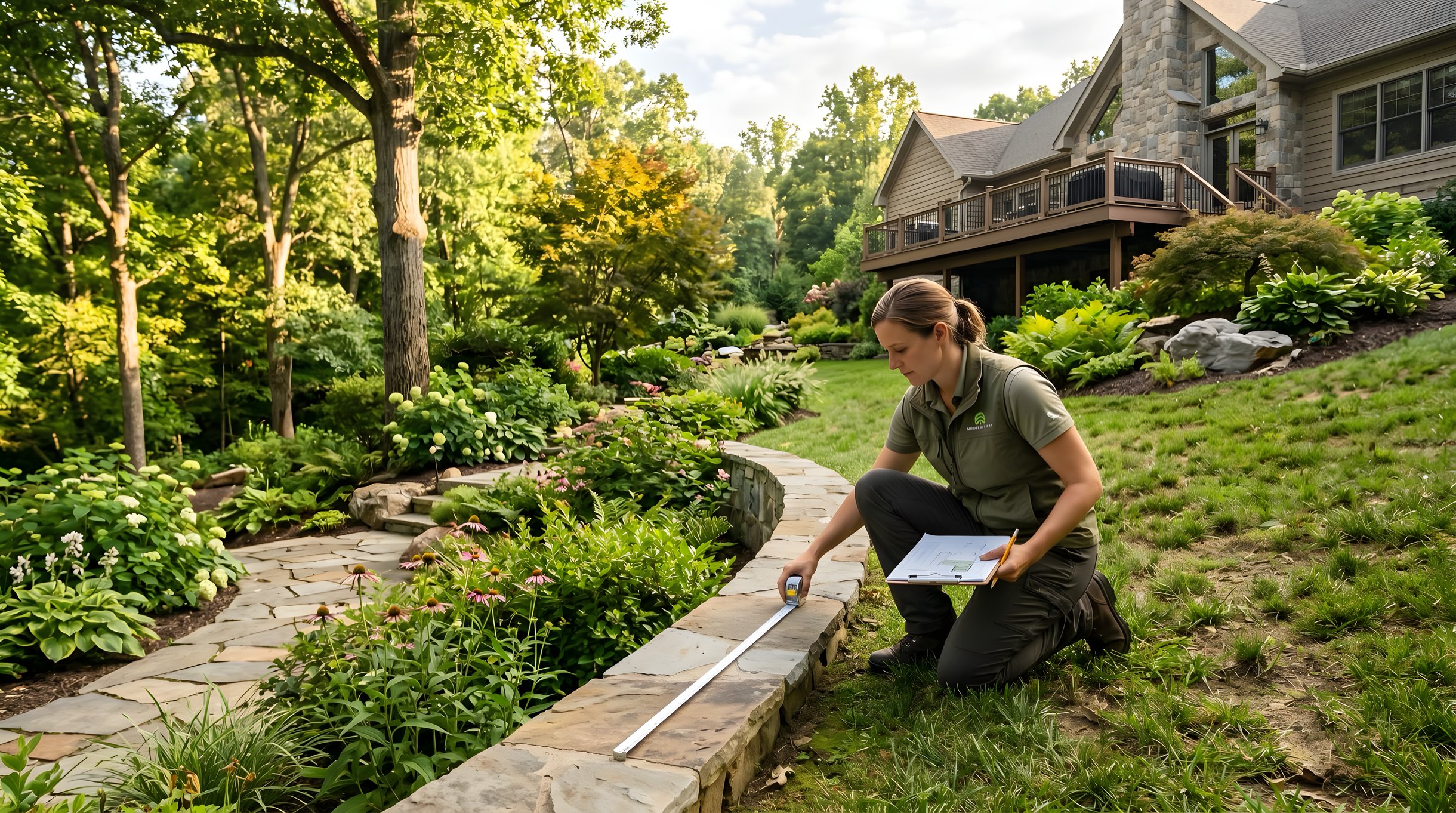
The first step is a site visit and conversation. A professional landscape company sends someone to walk your property with you, not just meet you at the front door and hand you a brochure.
During a Sunrise initial consultation, Mike Flickinger or one of our senior designers will assess the site conditions that affect design decisions. Grade and drainage. Sun exposure and shade patterns across the day. Soil type and existing vegetation. HOA setback requirements if applicable. Views to preserve or screen. How your family actually uses the space today, and how you want to use it after the project is complete.
This conversation is also where we listen. The homeowner who wants a patio and a fire pit but hasn't articulated why will often describe, when asked the right questions, that what they really want is a place to have dinner outside with their kids on a Tuesday evening. That distinction changes how we design the space. The right consultation extracts that intent and builds from it.
How Does the Design Phase Work?
After the initial consultation, the design phase begins. This is the phase most homeowners don't fully understand, and it's the one where trust is built or lost.
Concept Development
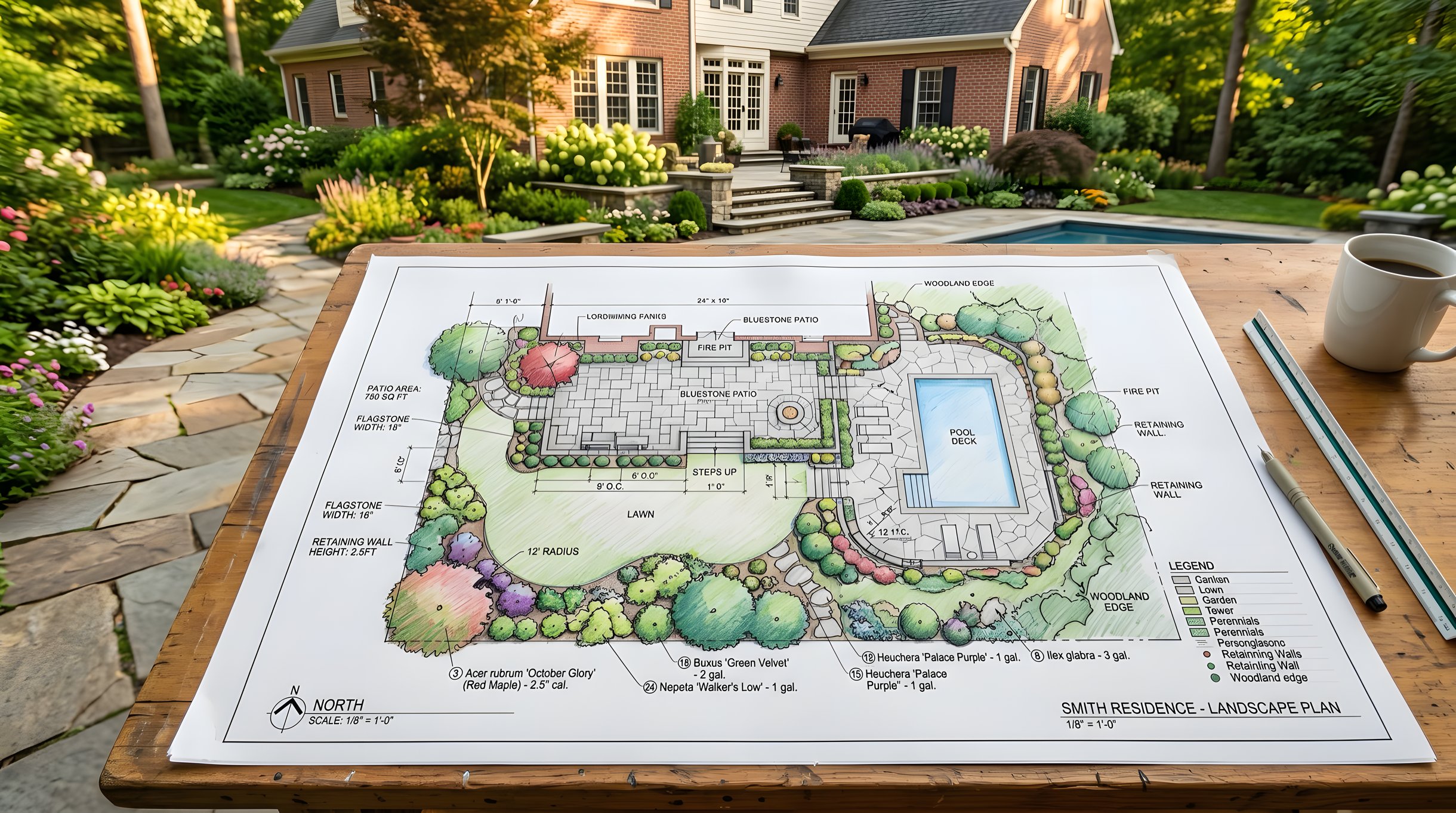
The designer translates the site assessment and client conversation into a concept. At this stage, the concept might be a hand sketch or a digital layout that shows the general organization of the space: where the patio sits, where the fire feature goes, how grade changes are handled, where plantings define the edges of the space. The goal is to get alignment on the overall approach before anyone invests time in detailed drawings.
Design Development
Once the concept is approved, the design gets developed into full construction drawings. These documents specify materials, dimensions, grades, drainage details, plant species, and quantities. For projects involving permitted structures, this is the set of drawings submitted for approval.
This is also where the homeowner gets to see exactly what they're getting. A professional design-build firm doesn't ask you to sign a contract based on a vague description of the finished project. You should be able to look at the drawings and understand precisely what will be built before you commit to it.
3D Visualization
For larger or more complex projects, 3D visualization tools let clients see a photorealistic rendering of the finished space before construction begins. This is one of the most valuable services a design-build firm can offer, because the gap between a two-dimensional plan and a finished space is genuinely hard to bridge in your head when you're standing in an empty backyard.
Homeowners who see a 3D rendering of their project before signing consistently report feeling more confident in their decision and experiencing fewer surprises during construction. That confidence is worth the investment in the visualization process.
What Does the Proposal and Contract Process Look Like?
A professional landscape design and build proposal is detailed. Not a one-page estimate with three line items. A document that specifies the scope of work, the materials to be used (by name and specification, not just category), the payment schedule tied to project milestones, the timeline, and the process for handling changes.
The payment schedule should be milestone-based. An initial deposit to secure the project and cover design costs. A payment at the start of construction. One or two progress payments tied to specific phases of completion. A final payment on project completion. Any contract that asks for more than 30 to 40 percent of the total project cost before work begins deserves scrutiny.
Changes happen on every project of any meaningful size. Site conditions that weren't visible until the ground was opened. A homeowner who decides mid-project to extend the patio or add a feature. A material that needs substitution because of availability. A professional contract specifies exactly how changes are documented, priced, and approved before they affect the schedule or the cost.
What Happens During Construction?
Once the design is approved and the contract is signed, construction begins. For a professional landscape design and build firm, this phase follows a logical sequence that protects both the work and the client's investment.
Site Preparation
Existing vegetation is removed as specified. Grade is adjusted to match the design. In Northern Virginia, where clay soils and drainage issues are common, this phase often includes installing drainage infrastructure before any hardscape or planting goes in. Getting drainage right at the beginning is far less expensive than addressing it after the patio is laid.
Hardscape Installation
Patios, walls, walkways, and structural features are built first. These are the permanent bones of the project. In the Northern Virginia climate, proper base preparation is critical. Paver patios require a compacted gravel base of appropriate depth to handle frost heave. Retaining walls require proper drainage behind them. Cutting corners on these foundations produces visible failures within a few years.
Utility Work
Irrigation systems, landscape lighting conduit, gas lines for fire features, and any electrical work happen after hardscape and before softscape. Running these systems before the final grades are established and before planting begins saves significant cost compared to doing it later.
Planting and Finishing
Plants go in after hardscape and utility work is complete. Topsoil and amendments are incorporated based on soil test results. Mulch, edging, and final grading complete the installation. A professional company does a final walkthrough with the client, documents any punch-list items, and establishes a clear timeline for resolving them.
How Should Communication Work During a Design-Build Project?
This is the area where most contractors fail, and where good ones distinguish themselves.
You should have a named point of contact at the company. Someone whose direct number you have and who is responsible for keeping you informed. At Sunrise, every project has a dedicated project lead who provides updates at the start of each phase and responds to client messages within one business day.
Updates shouldn't require you to call and ask. You should receive proactive communication when a phase is complete, when the schedule shifts for any reason, when a material substitution is being proposed, and when any issue is encountered that requires your input or approval.
Communication that requires you to chase your contractor is not professional service. It's a preview of what the rest of the project will look like.
What Happens After the Project Is Complete?
A professional landscape design and build company doesn't disappear after the final payment clears. They walk the completed project with you, explain the care requirements for new plantings, confirm that all systems are functioning correctly, and schedule a follow-up visit in the weeks after completion to address anything that needs attention.
New plantings require a season of establishment. A reputable company provides guidance on watering schedules, fertilization timing, and what to expect as new plants root in and begin to establish. They also warrant their work. Plantings that don't make it through the first season are replaced. Hardscape defects are corrected.
The companies you want to avoid are the ones who are always available until the final payment and then impossible to reach. That pattern is predictable and preventable if you ask the right questions before you hire.
Frequently Asked Questions
How long does the full landscape design and build process take in Northern Virginia?
From initial consultation to project completion, a residential landscape design and build project in Northern Virginia typically takes eight to sixteen weeks. The design phase runs two to four weeks. Permitting, if required, adds two to six weeks depending on the jurisdiction. Active construction runs one to six weeks depending on scope. Scheduling lead times vary by season.
Should I hire a design-build firm or separate my designer and contractor?
For most residential projects, a design-build firm produces better outcomes. The communication between design and construction is tighter, accountability is clearer, and the finished result more closely reflects the original intent. Separating design and construction makes sense primarily for very large or complex projects where multiple specialized contractors are required.
What happens if I want to change something after the design is approved?
Changes are common and manageable when they're handled through a documented change order process. A professional design-build firm documents the change in writing, provides a price and schedule impact before proceeding, and gets written approval before making any change. Changes handled verbally or without documentation create the disputes that end up in small claims court.
How do I know the construction quality will match what was designed?
Ask to see completed projects from the last two years and verify that they match the quality level shown in the company's portfolio. Speaking with past clients directly is the most reliable method. Ask specifically whether the finished project matched the design as presented, and whether the quality of construction met their expectations.
What warranty should I expect from a landscape design and build company?
A professional company warrants both the labor and the plant material. Hardscape workmanship warranties in the industry typically run one to two years. Plant warranties covering survival through the first growing season are standard. Ask for the warranty terms in writing before signing the contract.
Work With Northern Virginia's Most Experienced Design-Build Team
Sunrise Landscape and Design has been completing design-build landscape projects across Northern Virginia for over 38 years. Every project follows the process described in this guide. No shortcuts in the design phase. No communication gaps during construction. No disappearing act after the final payment.
Mike Flickinger personally oversees every project to ensure the finished result matches what was promised. If you're ready to understand exactly what's possible on your property, we'd like to show you.
Schedule a consultation with Sunrise Landscape and Design and experience the difference a professional process makes. You can also explore our full design services and hardscape portfolio.