

Professional landscape maintenance services typically include mowing, pruning, mulching, fertilization, pest control, irrigation management, and seasonal cleanups. According to HomeAdvisor, the average homeowner spends between $100 and $400 per month on landscape maintenance, with annual costs ranging from $1,200 to $4,800 depending on property size and service frequency. For Northern Virginia homeowners in Ashburn, Leesburg, Reston, Vienna, McLean, Great Falls, and surrounding areas, understanding what's included helps you budget accurately and keep your property looking its best year-round.
Key Takeaways
- Full-service landscape maintenance covers mowing, pruning, mulching, fertilization, pest control, irrigation, and seasonal cleanups.
- Northern Virginia homeowners spend $1,200 to $4,800 annually on maintenance (HomeAdvisor).
- Zone 7a seasonal timing matters: spring cleanup starts mid-March, fall leaf removal runs October through December.
- Hiring a professional saves roughly 4 hours per week compared to DIY maintenance.
- A month-by-month calendar keeps your Northern Virginia landscape healthy through every season.
What Are Landscape Maintenance Services?
Landscape maintenance services are recurring professional care programs that keep residential and commercial properties healthy, attractive, and functional. The National Association of Landscape Professionals reports that the U.S. landscaping services industry generates over $176 billion annually, reflecting strong demand from property owners who prioritize outdoor upkeep.
Landscape maintenance services encompass scheduled lawn care, plant health management, and seasonal property cleanup. The U.S. landscaping services market exceeds $176 billion in annual revenue (National Association of Landscape Professionals, 2024), driven by homeowners seeking reliable, year-round property care.
These services go beyond just cutting grass. A comprehensive maintenance program addresses every layer of your landscape, from turf health and plant vitality to hardscape cleanliness and drainage function.
Here's what a full-service maintenance plan typically covers:
Lawn Mowing and Edging
Regular mowing keeps turf at the optimal height for your grass type. In Northern Virginia, most lawns feature cool-season grasses like tall fescue and Kentucky bluegrass, which thrive when mowed to 3 to 3.5 inches. Professional crews mow weekly during the growing season (April through October) and edge along sidewalks, driveways, and bed lines for a clean finish.

Pruning and Trimming
Shrubs, ornamental trees, and perennials need regular pruning to maintain shape, promote healthy growth, and prevent disease. Timing matters. Spring-blooming shrubs like azaleas should be pruned right after flowering, while summer bloomers get trimmed in late winter. Most maintenance plans include pruning on a seasonal rotation.
Mulching
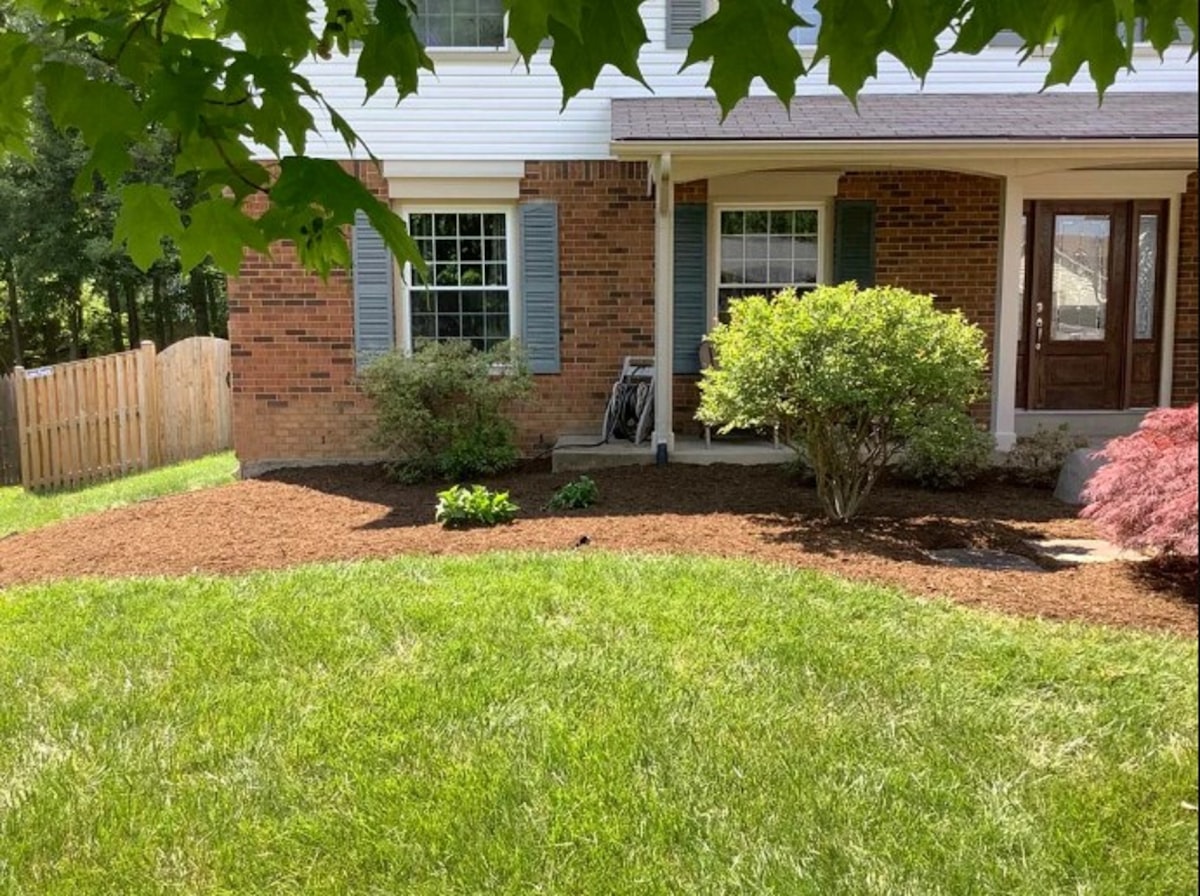
A fresh 2-to-3-inch layer of mulch suppresses weeds, retains soil moisture, and regulates root temperature. The Virginia Cooperative Extension recommends organic mulches like shredded hardwood for Northern Virginia landscapes. Most providers apply mulch once or twice per year, typically in spring and fall.
Fertilization and Weed Control
Healthy turf needs regular nutrient applications. A standard program includes four to six fertilizer treatments per year, along with pre-emergent herbicide in early spring and targeted weed control throughout the growing season. Soil testing, recommended every two to three years, helps tailor nutrient ratios to your specific lawn conditions.
Pest and Disease Management
Common Northern Virginia pests include grubs, chinch bugs, and Japanese beetles. Integrated pest management (IPM) approaches combine monitoring, biological controls, and targeted treatments. A University of Maryland Extension study found that IPM-based programs reduce pesticide use by up to 70% compared to calendar-based spraying.
Irrigation System Management
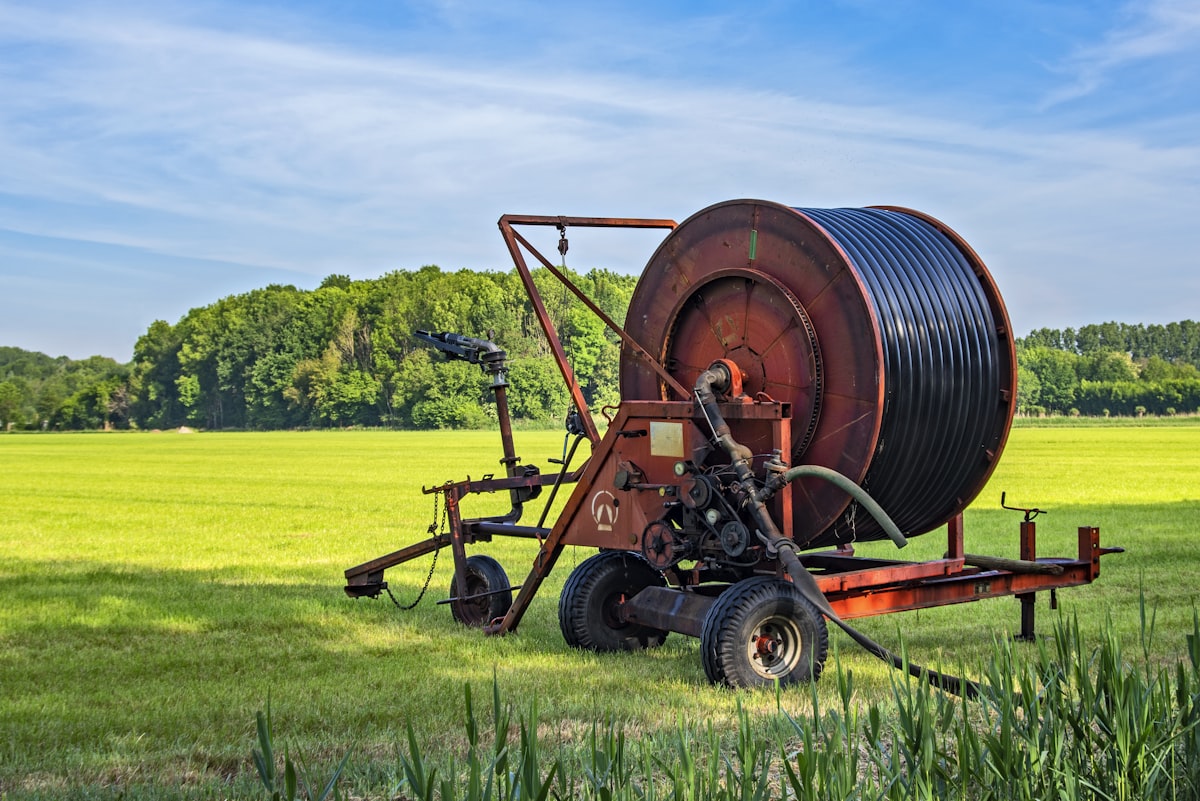
If your property has an irrigation system, maintenance typically includes spring startup, seasonal adjustments, winterization (blowout), and periodic inspections for leaks or coverage gaps. Properly managed irrigation prevents both overwatering and drought stress, two common problems in Northern Virginia's humid subtropical climate.
Seasonal Cleanups
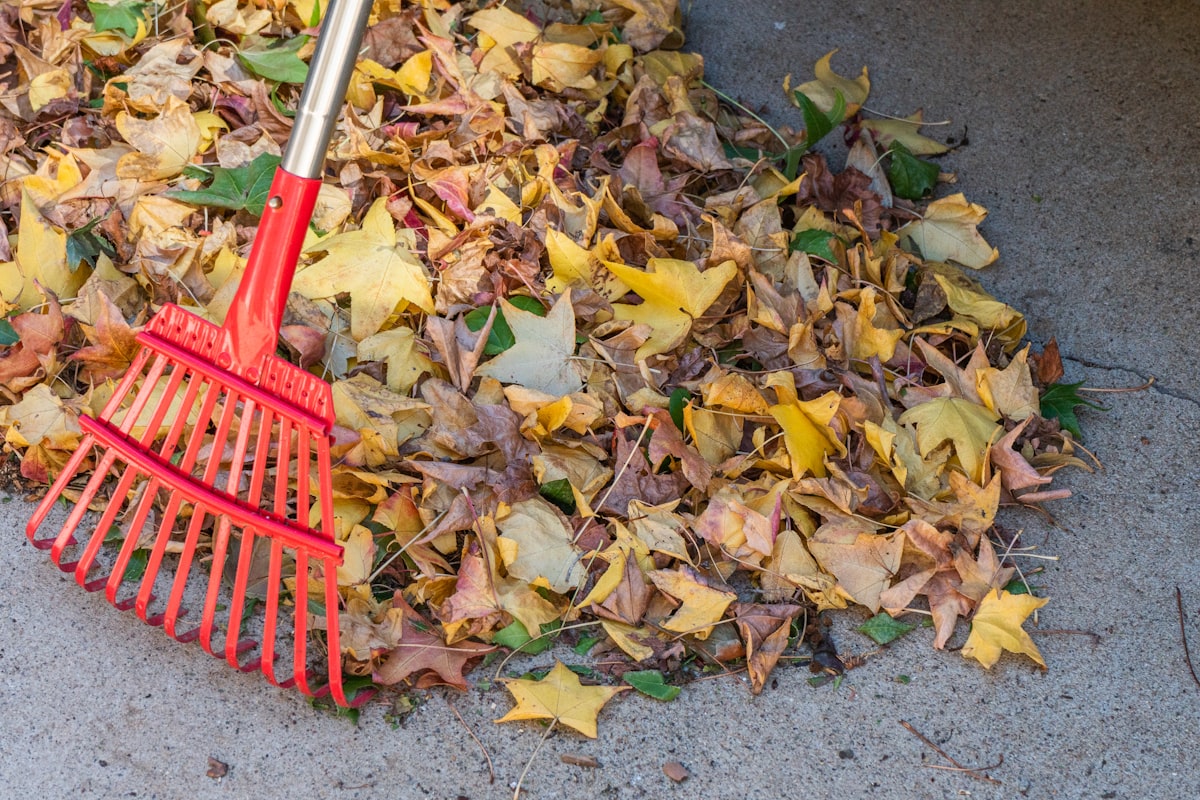
Spring and fall cleanups are labor-intensive anchor events. Spring cleanup in Northern Virginia involves removing fallen debris, cutting back dead perennials, raking out thatch, and preparing beds for new growth. Fall cleanup focuses heavily on leaf removal, particularly in oak and maple-heavy neighborhoods throughout Ashburn, Great Falls, and McLean, where leaf volume can be enormous.
How Much Do Landscape Maintenance Services Cost?
Northern Virginia homeowners pay between $150 and $500 per month for professional landscape maintenance, according to Angi (2024). Annual costs typically range from $1,800 to $6,000, depending on lot size, service frequency, and the scope of work included.
Residential landscape maintenance in Northern Virginia costs $150 to $500 per month, or $1,800 to $6,000 annually (Angi, 2024). Pricing depends on lot size, service tier, and whether specialty services like irrigation management or pest control are bundled.
Based on typical pricing structures across Northern Virginia landscaping companies, here's how costs generally break down:
Common Pricing Models
| Pricing Model | How It Works | Best For |
|---|---|---|
| Per-visit | Flat fee each service visit ($50-$150) | Small properties, basic mowing only |
| Monthly retainer | Fixed monthly fee covering all scheduled services ($150-$500) | Full-service maintenance on residential lots |
| Annual contract | Yearly agreement with monthly billing ($1,800-$6,000/year) | Homeowners wanting predictable costs and priority scheduling |
| A la carte | Individual services priced separately | Supplementing DIY efforts with specific professional tasks |
What Drives the Price Up?
Several factors push maintenance costs higher. Lot sizes above half an acre add mowing and cleanup time. Properties with extensive planting beds, mature trees, or specialty gardens (Japanese maples, roses, ornamental grasses) require more skilled labor. Irrigation system management, pest control programs, and hardscape maintenance are often add-ons that increase monthly fees.
But how does this compare to doing everything yourself?
Should You DIY or Hire a Professional for Landscape Maintenance?
Homeowners who DIY their lawn care spend an average of 4 hours per week on yard work, according to the American Time Use Survey from the Bureau of Labor Statistics. That adds up to over 200 hours annually, time that most busy professionals and families in Northern Virginia would rather spend elsewhere.
The average homeowner spends 4 hours per week on yard work, totaling over 200 hours annually (Bureau of Labor Statistics, American Time Use Survey). Professional landscape maintenance saves this time while delivering more consistent results through commercial equipment and trained crews.
When DIY Makes Sense
DIY maintenance works well for small properties with simple landscapes. If you enjoy yard work as a hobby, have the right equipment, and keep up with a consistent schedule, handling basic mowing and weeding yourself is perfectly reasonable. Owning a quality mower, trimmer, and blower costs $800 to $2,000 upfront plus fuel and maintenance.
When Hiring a Pro Is Worth It
Professional maintenance becomes the smarter choice when your property has complex planting beds, mature trees requiring skilled pruning, or irrigation systems needing seasonal management. Professionals also bring commercial-grade equipment that delivers better results faster. A crew of three can complete in 45 minutes what takes a homeowner an entire Saturday morning.
Many Northern Virginia homeowners start with DIY maintenance and transition to professional service after one or two seasons. The combination of summer heat, heavy fall leaf volume, and the sheer time commitment tends to shift the calculation toward hiring help.
How Do You Evaluate a Landscape Maintenance Provider?
The Better Business Bureau reports that landscaping ranks among the top 20 most-complained-about service categories, making careful provider selection critical. Not all maintenance companies deliver the same quality, reliability, or value.
Landscaping ranks among the top 20 most-complained-about service categories (Better Business Bureau), making provider vetting essential. Homeowners should verify licensing, insurance, references, and contract terms before committing to any maintenance agreement.
Questions to Ask Before Signing a Contract
Use this checklist when evaluating potential providers:
- Licensing and insurance: Virginia requires landscaping businesses to carry liability insurance. Ask for proof of general liability and workers' compensation coverage.
- Service scope: Get a written list of exactly what's included in the quoted price. "Maintenance" means different things to different companies.
- Crew consistency: Will the same crew service your property each visit? Consistency leads to better results because the crew learns your landscape.
- Communication: How do you report issues or request changes? The best companies offer a dedicated point of contact, not just a generic call center.
- Contract flexibility: Look for month-to-month options or contracts with reasonable cancellation terms. Avoid long lock-in periods with heavy penalties.
Red Flags to Watch For
Be cautious of providers who demand large upfront payments, refuse to provide written contracts, or can't show proof of insurance. Extremely low bids often signal corner-cutting, unlicensed crews, or bait-and-switch pricing where costs escalate after the first month.
Is there a way to know which tasks belong to which season? Absolutely.
What Does a Northern Virginia Landscape Maintenance Calendar Look Like?
Northern Virginia sits in USDA Hardiness Zone 7a, with average last frost dates around April 15 and first frost dates near October 15, according to the USDA Plant Hardiness Zone Map. This 6-month growing window shapes every maintenance decision.
Northern Virginia's Zone 7a climate features a growing season from roughly April 15 to October 15 (USDA Plant Hardiness Zone Map). This window dictates the timing for fertilization, pruning, planting, and seasonal cleanup tasks throughout the year.
Most national lawn care guides don't account for Northern Virginia's specific microclimate challenges: the late-spring cold snaps, the oppressive July and August humidity, and the heavy oak leaf drop that extends well into December in areas like Great Falls and McLean. A truly local calendar makes all the difference.
Month-by-Month Maintenance Calendar (Zone 7a)
| Month | Key Tasks |
|---|---|
| January | Equipment maintenance and sharpening. Plan the year's landscape projects. Monitor for ice damage on shrubs and trees. |
| February | Apply pre-emergent crabgrass preventer by late February if soil temps approach 55F. Prune summer-blooming shrubs (crepe myrtle, butterfly bush) while dormant. |
| March | Spring cleanup begins mid-March: rake debris, cut back ornamental grasses and dead perennials. Start irrigation system spring startup. First fertilizer application for cool-season lawns. |
| April | Begin weekly mowing once grass actively grows. Apply mulch to planting beds (2-3 inch layer). Divide and transplant perennials. Monitor for early pest activity. |
| May | Mowing continues weekly. Post-emergent weed control as needed. Adjust irrigation schedules for warmer temps. Deadhead spring-blooming perennials. Prune azaleas and rhododendrons after flowering. |
| June | Second fertilizer application. Watch for grub damage in lawns. Raise mowing height to 3.5-4 inches as temperatures climb. Deep water during dry spells (1 inch per week). |
| July | Heat stress management: water early morning, avoid fertilizing during extreme heat. Monitor for chinch bugs and fungal disease. Minimal pruning to reduce plant stress. |
| August | Overseed thin or bare lawn areas in late August. Core aerate compacted lawns. Third fertilizer application (late month). Continue heat stress irrigation protocols. |
| September | Prime renovation month: overseeding, aeration, and fall fertilization. Plant trees, shrubs, and perennials. Adjust irrigation run times downward as temps cool. |
| October | Fall cleanup begins: first major leaf removal pass. Winterize irrigation systems before first hard freeze. Apply final "winterizer" fertilizer. Plant spring-blooming bulbs. |
| November | Heavy leaf removal, especially in oak-heavy neighborhoods (Ashburn, Great Falls, Reston). Continue mowing as needed (grass still grows slowly). Cut back remaining perennials. |
| December | Final leaf cleanup (oaks hold and drop leaves late). Wrap vulnerable evergreens if needed. Review the year's maintenance results and plan for next season. |
What Are the Most Important Seasonal Tasks for Northern Virginia Properties?
The Virginia Cooperative Extension identifies fall as the most critical season for cool-season lawn health, since roughly 60% of a fescue lawn's root growth occurs between September and November. Nailing the fall window directly determines how your lawn performs the following spring and summer.
Approximately 60% of cool-season lawn root development occurs between September and November (Virginia Cooperative Extension). Fall aeration, overseeding, and fertilization during this window are the single most impactful maintenance investments for Northern Virginia lawns.
Spring (March - May)
Spring cleanup should start in mid-March once the ground firms up. Don't rush. Cleaning beds too early can damage emerging bulbs and perennials. The key tasks are debris removal, mulch application, pre-emergent herbicide (timing is critical, soil temperature needs to reach 55F consistently), and irrigation system startup.
Summer (June - August)
Summer in Northern Virginia means heat stress management. Water deeply but infrequently, favoring early morning irrigation. Raise mowing height to shade roots and retain soil moisture. Avoid heavy fertilization during July's peak heat. Late August marks the start of the critical fall renovation window.
Fall (September - December)
This is the season that separates good landscapes from great ones. Aerate and overseed in September. Apply fall fertilizer. Begin leaf removal in October and plan for multiple passes through December. In oak-heavy neighborhoods across Great Falls, McLean, and parts of Ashburn, leaf volume is extraordinary. Some properties require weekly removal through mid-December.
Winter (January - February)
Winter is planning season. Sharpen tools, service equipment, and review what worked (and what didn't) in the prior year. Watch for snow and ice damage to shrubs and small trees. Prune dormant deciduous trees and summer-blooming shrubs in February.

Frequently Asked Questions About Landscape Maintenance Services
How often should my lawn be mowed in Northern Virginia?
During the active growing season (April through October), weekly mowing is standard for most Northern Virginia properties. Cool-season grasses like tall fescue grow rapidly in spring and fall but slow down during summer heat. Some providers switch to biweekly mowing in July and August when growth slows. The Virginia Cooperative Extension recommends never removing more than one-third of the grass blade height at once.
What's the difference between landscape maintenance and lawn care?
Lawn care focuses specifically on turf, including mowing, fertilization, and weed control. Landscape maintenance is broader. It covers everything lawn care includes plus pruning shrubs and trees, managing planting beds, mulching, irrigation oversight, pest control, and seasonal cleanups. Think of lawn care as one component within a full landscape maintenance program.
When should I schedule fall leaf removal in Northern Virginia?
Start in mid-October and plan for ongoing removal through mid-December. Northern Virginia's heavy oak and maple canopy means leaves drop over a long period. Oaks in particular hold their leaves late into November and December. Most professional services include three to five fall cleanup visits rather than a single pass, because one trip simply isn't enough.
Can I bundle landscape maintenance with other services like hardscaping or lighting?
Yes. Many full-service landscape companies offer bundled packages that include maintenance alongside design, hardscaping, outdoor lighting, and drainage solutions. Bundling often reduces overall costs because the provider already knows your property. It also simplifies scheduling and communication since you deal with one company instead of multiple vendors.
Is a maintenance contract worth it, or should I pay per visit?
For properties larger than a quarter acre or landscapes with planting beds and irrigation systems, an annual contract almost always provides better value. Contracts lock in pricing, guarantee priority scheduling, and include the full range of seasonal services. Per-visit pricing works for small, simple properties where you only need basic mowing. According to LawnStarter, contract customers pay 10% to 20% less per service than per-visit customers on average.
Take the Next Step for Your Northern Virginia Landscape
Keeping a Northern Virginia property looking its best requires consistent, season-appropriate care. From spring cleanup and summer irrigation to fall aeration and winter prep, every month brings specific tasks that directly affect your landscape's health and appearance.
The right maintenance program saves you time, protects your investment, and keeps your outdoor spaces functional and beautiful throughout the year. Whether you manage a quarter-acre lot in Reston or a multi-acre estate in Great Falls, professional maintenance delivers results that are difficult to replicate on your own.
Ready to get started? Sunrise Landscape and Design has served Northern Virginia homeowners and property managers for over 39 years. Get a free maintenance quote and find out what a customized maintenance plan looks like for your property.
Meta Description (156 chars): Landscape maintenance services include mowing, pruning, mulching, and seasonal cleanup. Northern Virginia homeowners pay $1,800-$6,000/year on average.
Target Keyword: landscape maintenance services Secondary Keywords: landscape maintenance, landscape maintenance near me, landscape maintenance services near me, residential landscape maintenance Word Count: ~2,100 -->